
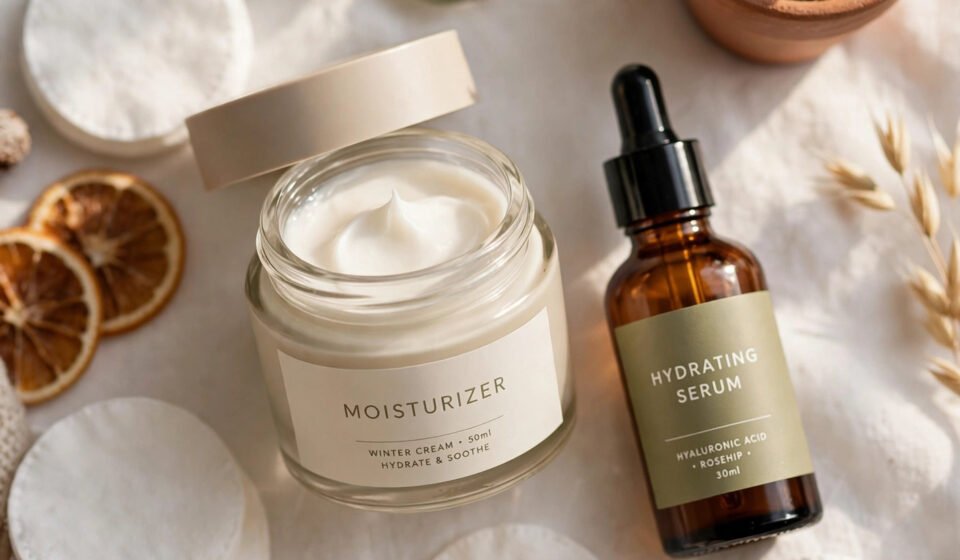

Cold air outside, dry heated air inside — winter is the hardest season for your skin. If your face feels tight by midday, flakes around the nose, or your makeup starts looking cakey no matter what foundation you use, the problem is usually not your makeup. It is your moisturizer. Finding the best moisturizer for winter dry skin 2026 is less about the most expensive jar and more about matching the formula to your skin type and using it correctly. This guide breaks down exactly how to choose, what ingredients matter, and how to apply moisturizer so your skin stays comfortable all winter.
Why Winter Dries Out Your Skin
Your skin stays hydrated because of a thin barrier of natural oils and lipids that seals moisture in. Winter attacks that barrier from two sides: cold outdoor air holds very little moisture, so it pulls water from your skin, and indoor heating drops humidity even further. Hot showers, which everyone takes more of in winter, strip the oils even faster. The result is transepidermal water loss — moisture evaporating from your skin faster than your body can replace it. A good winter moisturizer does two jobs: it adds water back (humectants like hyaluronic acid and glycerin) and it seals it in (occlusives like ceramides, squalane, and shea butter). Summer moisturizers are usually light on the sealing part, which is why the cream that worked in July leaves your skin tight in December.
How to Choose: Match the Formula to Your Skin Type
The best moisturizer for winter dry skin 2026 is not one single product — it is the right texture for your skin. For very dry or flaky skin, choose a rich cream or balm in a jar; these have the highest oil content and the strongest seal. Look for words like “intensive,” “barrier repair,” or “for very dry skin” on the label. For combination skin, a medium-weight cream works best — rich enough for dry cheeks but not so heavy it clogs the oilier T-zone. You can also use two products: a lighter gel-cream on the forehead and nose, and a richer cream on the cheeks. For oily skin that still gets dehydrated in winter (yes, oily skin can be dehydrated), pick an oil-free gel-cream with hyaluronic acid — it adds water without adding grease. For sensitive skin, fragrance-free is non-negotiable in winter, because sensitized winter skin reacts to fragrance more easily; look for short ingredient lists with ceramides, colloidal oatmeal, or centella.
Key Ingredients That Actually Work in Winter
Ignore the marketing and read the ingredient list. The most effective winter moisturizer ingredients are well-studied and unglamorous. Ceramides are lipids your skin barrier is made of — a moisturizer with ceramides literally rebuilds the barrier winter breaks down. Hyaluronic acid holds up to 1,000 times its weight in water, but it needs humidity or damp skin to work, so always apply it to slightly damp skin, never bone-dry skin. Glycerin is the quiet workhorse that pulls moisture into the skin and rarely causes reactions. Squalane (from olives or sugarcane) mimics your skin’s own oils and absorbs fast without greasiness. Shea butter and petrolatum are the heavy sealers — petrolatum in particular is one of the most effective moisture barriers known, despite its unfashionable image. Niacinamide (vitamin B3) strengthens the barrier and calms redness, which makes it ideal for winter-irritated skin. If a moisturizer contains two or three of these, it is a strong winter candidate regardless of brand.
Ingredients and Habits to Avoid in Winter
Some common products make winter dryness worse. Foaming cleansers with sulfates strip the oils your barrier needs — switch to a creamy or milky cleanser in winter. Alcohol-based toners (look for “alcohol denat” high on the list) evaporate fast and take your skin’s moisture with them. Over-exfoliating with strong acids or scrubs damages the barrier; in winter, exfoliate at most twice a week with a gentle product, or skip it on the driest weeks. Long, very hot showers feel great but are brutal for skin — keep showers warm and under 10 minutes, and moisturize within three minutes of toweling off, while skin is still slightly damp. This “three-minute rule” matters more than which brand you buy.
How to Apply Moisturizer for Maximum Effect
Application technique changes results more than most people expect. Start with damp skin — after cleansing, pat your face so it is moist but not dripping, then apply moisturizer immediately. Use about a nickel-sized amount for the whole face; too little leaves gaps, too much just sits on top. Warm it between your palms for a few seconds, then press it into the skin rather than rubbing hard — pressing pushes product into the skin instead of moving it around. Do not forget the neck, which shows dryness and aging as fast as the face, and the backs of the hands. In the morning, let the moisturizer absorb for two to three minutes before sunscreen and makeup — this prevents pilling and helps foundation sit smoothly instead of clinging to dry patches. At night, you can layer: a hydrating serum first, then your cream, and if your skin is very dry, a thin layer of a heavier balm or facial oil on top as the final seal.
Morning vs Night: Do You Need Two Different Moisturizers?
You do not strictly need two, but winter is the season where it helps most. A daytime moisturizer should layer well under sunscreen and makeup — medium weight, absorbs in a few minutes, no heavy residue. A nighttime moisturizer can be richer, because it has eight hours to work undisturbed and nobody cares if your pillow gets a little product on it. If you buy only one, choose the richer one and use a thinner layer in the morning. The real non-negotiable in the morning is sunscreen — winter sun through windows and reflected off any snow still damages skin, and UV damage weakens the barrier further. A moisturizer with SPF 30 is fine for mostly-indoor days; use a separate sunscreen if you spend real time outside.
How to Tell If Your Moisturizer Is Working
Give any new moisturizer two full weeks before judging it — skin barrier repair is slow. Signs it is working: your skin no longer feels tight an hour after washing, flakiness around the nose and brows decreases, makeup applies more smoothly, and your skin looks slightly plump rather than papery in harsh light. Signs it is wrong: stinging on application (the barrier is damaged or an ingredient irritates you — stop using it), new breakouts in areas you never break out (too heavy or comedogenic for you), or persistent greasiness hours later (too rich for daytime — move it to night use). If stinging happens with everything you try, your barrier may be compromised — simplify to a gentle cleanser and a plain ceramide cream for two weeks before reintroducing anything else.
Frequently Asked Questions About Winter Moisturizers
Should I switch moisturizers for winter or just use more of my current one?
If your current moisturizer is a light gel or lotion, using more of it rarely fixes winter dryness — you need a richer formula with better sealing ingredients. If it is already a medium cream, try using a slightly thicker layer first before buying something new.
Can oily skin skip moisturizer in winter?
No — skipping it makes oily skin worse, because dehydrated skin often overproduces oil to compensate. Use an oil-free, gel-cream formula with hyaluronic acid instead of skipping.
Is expensive moisturizer better than drugstore for winter dryness?
Not necessarily. The ingredients that matter most in winter — ceramides, glycerin, hyaluronic acid, petrolatum — are inexpensive, and many affordable drugstore creams contain them in effective amounts. Pay for the formula, not the brand.
Why does my skin sting when I apply moisturizer in winter?
Stinging usually means your moisture barrier is damaged and ingredients are penetrating deeper than they should. Switch to a fragrance-free, minimal-ingredient cream for one to two weeks and avoid acids, retinoids, and scrubs until the stinging stops.
Conclusion
The best moisturizer for winter dry skin 2026 is the one that matches your skin type, contains proven barrier ingredients like ceramides and glycerin, and gets applied to damp skin within minutes of washing. You do not need the most expensive jar — you need the right texture, the right ingredients, and consistent use morning and night. Fix the moisture barrier first, and everything else in your routine — from foundation to serums — starts working better. Your winter skin will thank you.