
Table of Contents
Quick Answer
So, what is a makeup palette used for? A makeup palette is a single compact case that holds several coordinated makeup shades — eyeshadows, blush, bronzer, highlighter, or lip colors — so you can create a complete look without carrying a dozen separate products. It is used for building everyday looks, experimenting with color, traveling light, and keeping your makeup routine fast and organized.
In one sentence: a makeup palette puts a whole makeup look together in one place, from a soft daytime finish to a bold evening glam look, without the clutter of many separate compacts and tubes.
- A complete look in one case: one palette can cover eyes, cheeks, and lips, so you need fewer products.
- Colors that already match: the shades inside a palette are chosen to work together, so you do not have to guess which colors go with each other.
- Faster everyday makeup: everything you need sits in one place, which saves time every morning.
- Easy to travel with: a single palette replaces several separate compacts, which makes it perfect for a handbag, gym bag, or suitcase.
- Great for learning: palettes let beginners try different finishes and colors without buying a full product for every shade.
What Is a Makeup Palette Used For?
A makeup palette is used for creating a finished makeup look with one organized tool. Instead of opening five or six separate products, you open a single case and find the shades you need, arranged in a layout that makes sense — light shades for highlighting, mid-tones for blending, and deeper shades for definition. That simple idea is why palettes have become a staple of modern makeup bags.
If you have ever wondered what is a makeup palette used for beyond eyeshadow, the answer is simple: it is a complete system for building a look. At its core, a palette is a collection of related makeup products pressed into one case. The most common kind is the eyeshadow palette, but palettes also exist for the face, cheeks, lips, and even the whole face at once. Each shade is placed in its own small pan or well, so the colors stay separate until you pick them up with a brush or your fingertip.
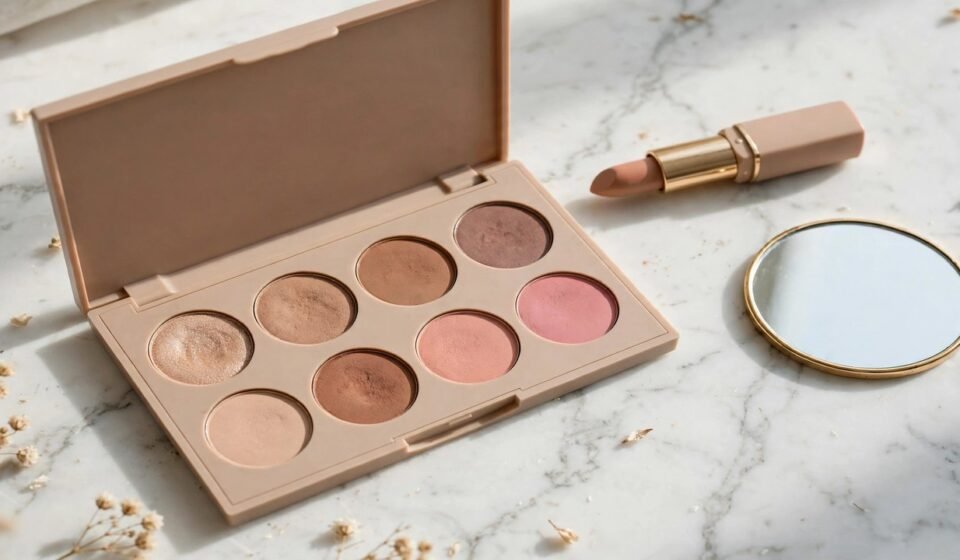
The practical purpose is convenience. A palette keeps your colors together, protects them in one sturdy case, and gives you a ready-made range of options for the look you want. A neutral palette might hold twelve shades of brown, beige, and taupe for workday looks, while a colorful palette might hold bright pinks, blues, and greens for parties and photoshoots. Either way, you are buying a small system, not just a single color.
Palettes also save space and money: buying shades one by one costs more per shade and takes up far more room, while one palette groups many shades into a single slim case.
Beyond convenience, a palette is used for learning: because the shades are chosen to coordinate, you can try a smoky eye or a soft wash of color without worrying that the colors will clash.
What Is a Makeup Palette Used For in Everyday Makeup?
In everyday makeup, a palette is used for the small, repeatable steps that make up a daily look. Most people do not use every shade every day. They use two or three: a light shade to brighten the lid or brow bone, a medium shade to add depth to the crease, and sometimes a deeper shade along the lash line for definition. That is the whole point — the palette is there so the right shade is always within reach.
Many people ask what is a makeup palette used for on a normal day, and the honest answer is the small, repeatable steps above. For a workday or school day, a neutral palette does almost everything: one matte shade across the lid, a deeper shade in the crease, and a touch of shimmer on the inner corner. The same palette can shape the rest of the face too — a warm brown doubles as a soft contour, and a shimmery champagne shade works as a subtle highlighter.
A face palette is used for the base steps of a daily routine: it holds blush, bronzer, and highlighter in one case, so you can add warmth, color, and glow in under a minute, and some also include a setting powder or contour shade.
For busy mornings, a palette is used for speed. You open one case instead of four, and you already know where each shade sits. Many people keep one go-to palette on their dressing table and leave the rest in a drawer, because that one palette covers the look they wear most days. That is the real everyday value of a palette: fewer decisions, less mess, and a finished look in a few minutes.
Uses of Each Palette Type
Not every palette does the same job. If you are still asking what is a makeup palette used for in practice, the table below shows how each type earns its place. Knowing the types helps you pick the right one instead of buying a palette that does not fit your routine.
| Palette Type | What It Is Used For | Best For |
|---|---|---|
| Eyeshadow palette | Coloring and defining the eyelids, crease, and brow bone | Everyday eye looks, smoky eyes, and colorful eye makeup |
| Face palette | Blush, bronzer, and highlighter in one case for the cheeks and face | Quick full-face warmth, color, and glow |
| Blush palette | Adding color to the cheeks with several blush shades and finishes | Matching blush to different outfits and seasons |
| Contour palette | Shading and shaping the cheekbones, jawline, and nose | Defined, sculpted looks and photography makeup |
| Highlighter palette | Adding glow and shine to the cheekbones, brow bone, and nose | Dewy, radiant, and party looks |
| Lip palette | Mixing and applying several lip colors from one case | Makeup artists and anyone who likes custom lip shades |
| All-in-one palette | Eyes, cheeks, and lips together for a complete look | Travel, beginners, and minimal makeup bags |
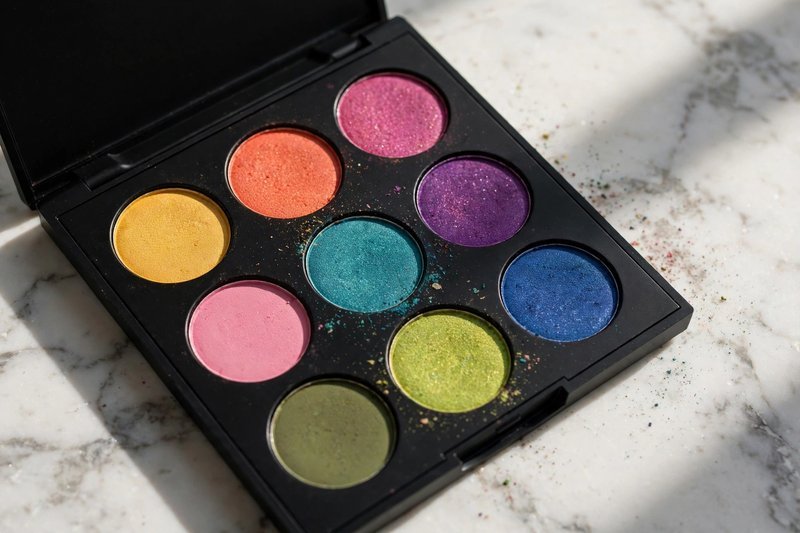
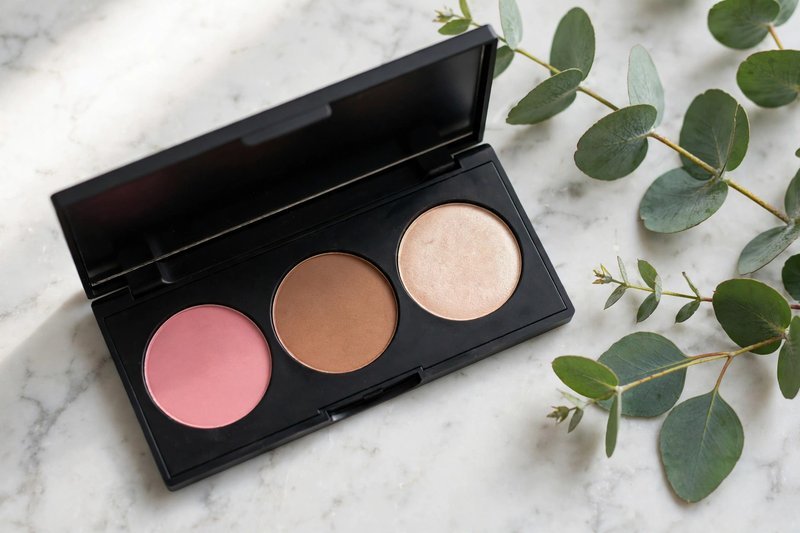
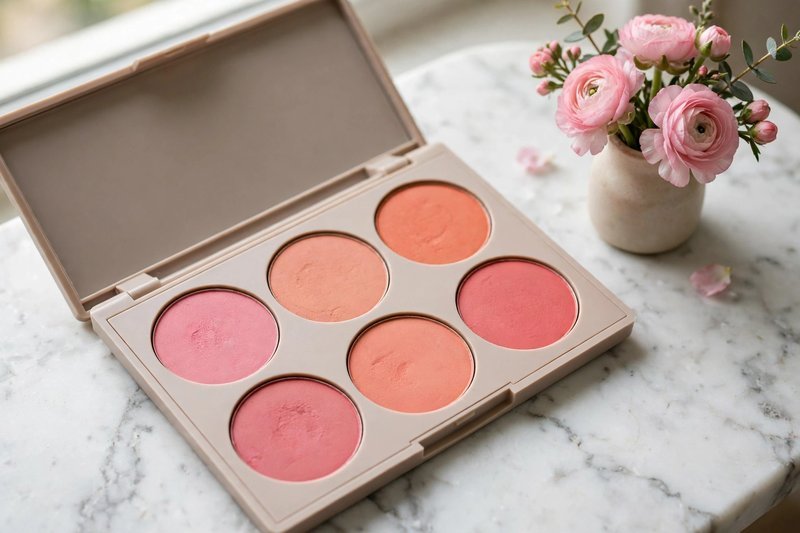
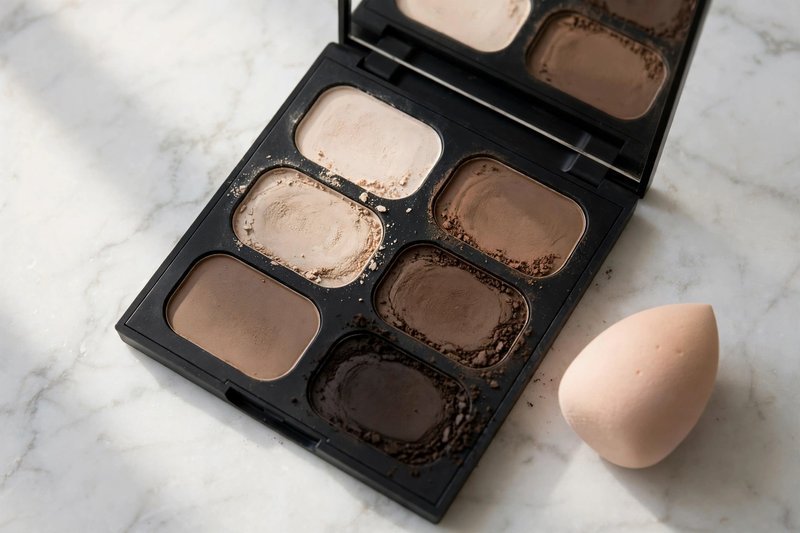
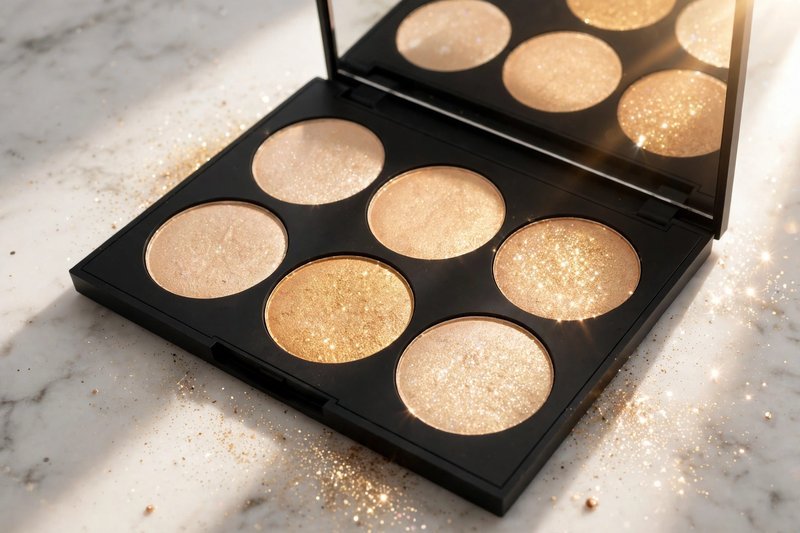
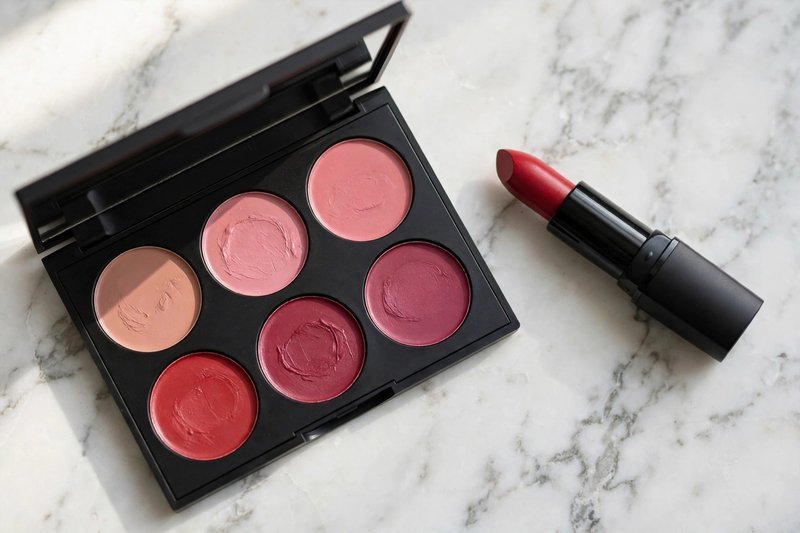
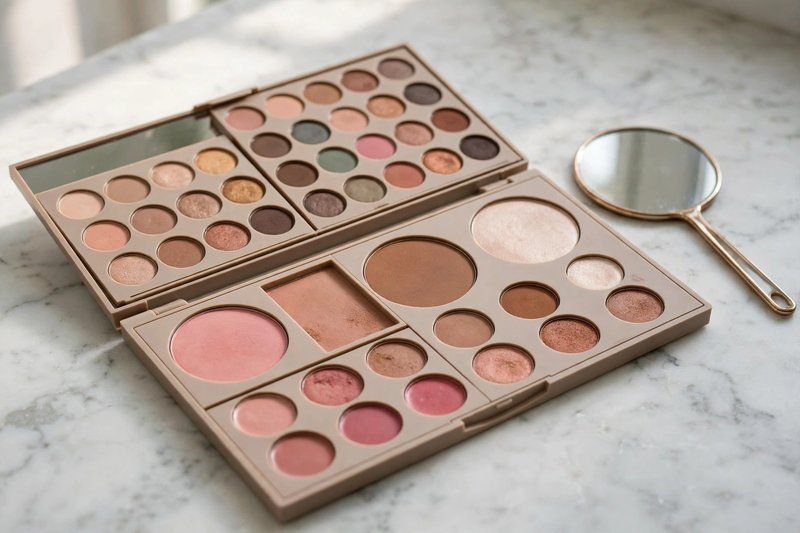
An eyeshadow palette is the most popular type and the one most people mean when they say “makeup palette.” It holds several shades in matte, shimmer, satin, and metallic finishes: matte shades are flat and soft for blending and definition, shimmer shades add a gentle sparkle for brightening the lid, satin shades sit between the two with a soft sheen, and metallic shades give a strong, reflective shine for bold looks.
A face palette is used for everything except the eyes and lips: it brings blush, bronzer, and highlighter together, so you can warm up the skin, add color, and finish with glow — all from one case.
Contour palettes hold deeper shades used for shaping the face with soft shadows, while highlighter palettes hold light, shimmery shades for the high points of the face. Both are used more for special occasions and photos than for a quick daily look.
A lip palette is used for lip color and is especially popular with makeup artists, who mix its shades to match any skin tone instead of carrying twenty lipsticks.
An all-in-one palette is the most versatile type: it mixes eyeshadows, blush, bronzer, and sometimes lip colors in one case for a complete look, which makes it the best choice for travel and for beginners. If you want to learn what a makeup palette is used for in real routines, seeing each type side by side makes the differences clear.
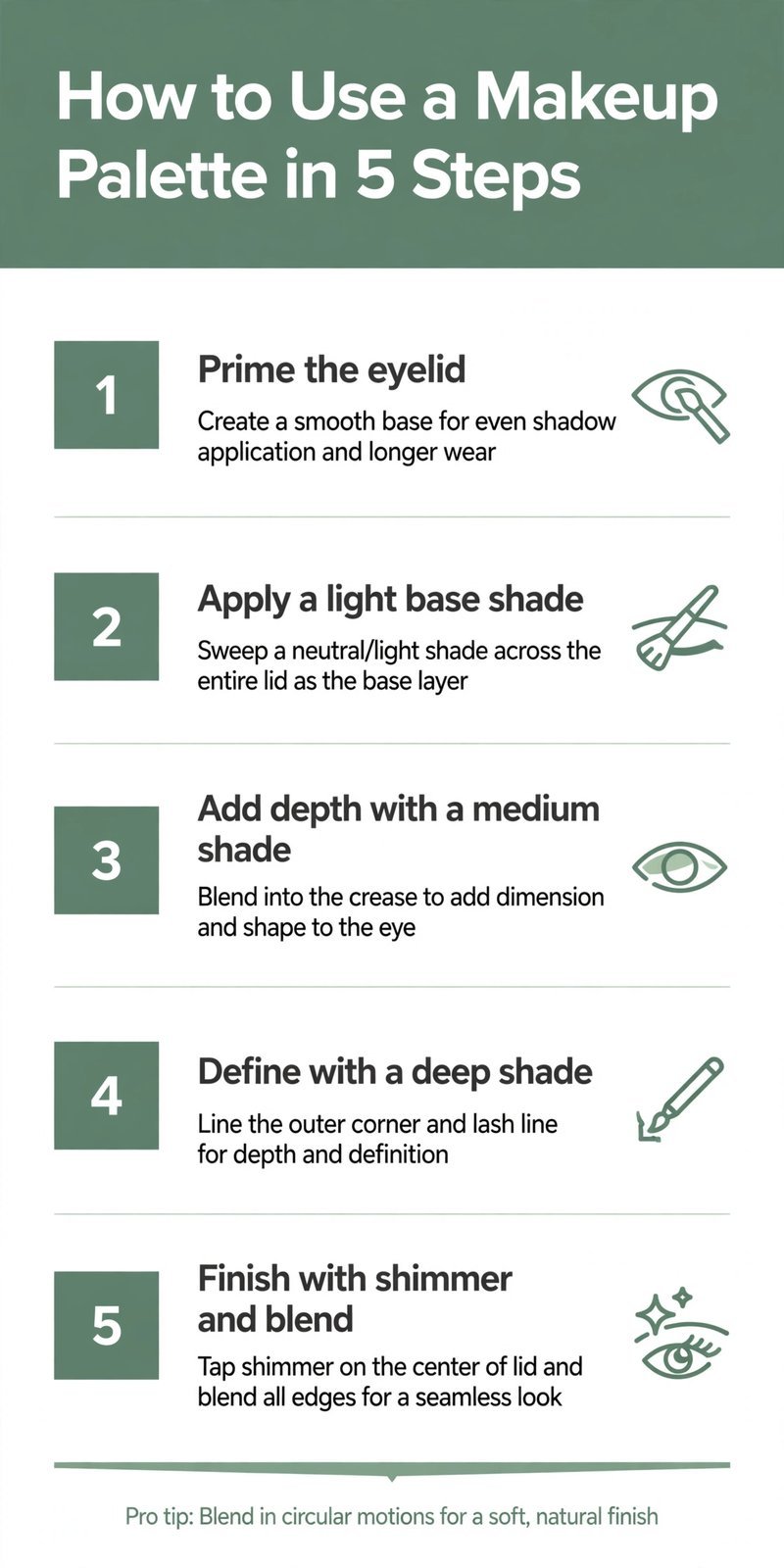
How to Use a Makeup Palette in 5 Steps
Using a palette is simple once you know the order. Once you know what is a makeup palette used for in a daily routine, the steps themselves are easy to follow. The shades are meant to be layered from light to dark, and each step builds on the one before it. Here is a basic routine that works with almost any eyeshadow palette.
- Prime the eyelid. Start with clean, moisturized skin and a thin layer of eyeshadow primer or concealer on the lid. This gives the powder something to grip, keeps the color true, and helps the look last through the day. Let it set for a few seconds before you add any shadow.
- Apply a light base shade. Pick the lightest matte or satin shade and sweep it across the whole lid, from lash line to brow bone, to even out the skin tone and create a smooth base. Use a flat brush or your fingertip and press the color on gently.
- Add depth with a medium shade. Choose a medium-toned shade and blend it into the crease with a fluffy brush, using small back-and-forth motions. This is the step that gives the eye its shape, so build the color slowly — it is easier to add more than to take away too much.
- Define with a deep shade. Take the deepest shade and press it along the outer corner and the lash line to add definition and make the eyes look bigger. Smudge it slightly with a small brush so there are no harsh lines.
- Finish with shimmer and blend. Tap a shimmer or metallic shade onto the center of the lid and the inner corner to catch the light. Then take a clean fluffy brush and blend the edges where two shades meet until the transitions look soft and seamless.
The same step-by-step idea works for a face palette too: bronzer first to warm the skin, blush on the apples of the cheeks, and highlighter last on the high points. The order matters because each layer sits on top of the last one, and the lightest, shiniest products always go on at the end. For more detail on the technique, this guide on how to use makeup palettes walks through brush choices and blending in a way that pairs well with the steps above.
Best Makeup Palette Uses for Beginners
When beginners ask what is a makeup palette used for, the best answer is learning. For beginners, a makeup palette is used for learning the basics without a big investment. One neutral palette can teach you blending, layering, and color placement, and it can carry you through everyday looks for months. You do not need a huge collection to start — you need one palette whose shades you actually understand.
The best beginner use is the simple three-shade eye look: a light shade on the lid, a medium shade in the crease, and a deep shade on the lash line. Practice this one look until blending feels natural. Once it does, you can start adding a shimmer shade on the lid or a deeper outer corner, and the palette will already have the shades waiting for you.
A palette is also used for practicing without pressure. Because you have many shades in one case, you can try a color on the back of your hand first, or test a bold shade on one eye before committing to both. If a color does not suit you, you simply wipe it off and try the next pan. That freedom to experiment is hard to get from single products, where every shade is a separate purchase.
Beginners also use palettes to learn which finishes they like: a palette with matte, shimmer, satin, and metallic shades lets you compare them side by side on your own skin, which costs far less than buying separate products to find out.
What Is a Makeup Palette Used For Beyond Eyeshadow?
Asking what is a makeup palette used for beyond the eyes is the fastest way to get more value from a palette you already own. A makeup palette is used for much more than eyeshadow, and knowing the extra uses gets more value out of the palette you already own. Many shades can do double duty on other parts of the face, which is one reason palettes are so popular.
A warm brown eyeshadow can work as a soft contour under the cheekbones or along the jawline. A light shimmery shade can work as a highlighter on the cheekbones, the brow bone, and the tip of the nose. A rosy or peachy shade can work as a blush when applied lightly with a fluffy brush. These swaps are common among makeup lovers because the powders in a palette are the same kind of product as blush, bronzer, and highlighter powders.
Palettes are also used for eyebrows: a matte brown shade that matches your hair color can fill in sparse brows with a soft, natural finish. Apply with an angled brush in short, light strokes and blend well.
Some people use palette shades as lip color too: a matte pink or berry shade mixed with lip balm creates a custom tint, and a shimmery shade in the center of the lips adds shine over a regular lipstick.
Common Mistakes to Avoid
Knowing what is a makeup palette used for is only half the job; using it well means avoiding the habits that ruin a look. The most common mistake is using too much product at once. Palette powders are pigmented, and a heavy hand can leave harsh lines and dark patches that are hard to fix. Tap the brush to remove extra powder before it touches your face, and build color in thin layers. You can always add more, but taking away too much color is much harder.
Another mistake is skipping the base. Eyeshadow applied on bare, oily skin can crease and fade within a few hours, so use a thin layer of primer or concealer, set with a light powder, to give the color a smooth surface that keeps it looking fresh. If your eyeshadow always disappears by lunchtime, this step is usually the reason why — and our guide on how to make eyeshadow last all day covers the full routine.
Using the wrong brush is a frequent mistake too: a flat, dense brush packs color onto the lid, while a fluffy brush blends it out, and using one brush for everything gives a muddy result. Two or three good brushes are enough, but each should be used for the job it was made for.
People also forget to blend. If you can see a clear line where one shade ends and another begins, the look is not finished. Take a clean fluffy brush and blend the edges with soft, small motions until the transitions look seamless. Blending takes a little time, but it is the step that makes a palette look professional instead of patchy.
Finally, do not ignore the palette itself: dirty brushes transfer old color and bacteria into the pans, and a palette left open in a steamy bathroom can dry out. Keep it closed, store it in a cool, dry place, and clean your brushes regularly.
Frequently Asked Questions
What is a makeup palette used for?
A makeup palette is used for creating a complete makeup look from one case. It holds several coordinated shades — for the eyes, cheeks, lips, or the whole face — so you can build a daytime or evening look without carrying many separate products.
Can one palette do a full face of makeup?
Yes, if it is an all-in-one palette. These palettes combine eyeshadows, blush, bronzer, highlighter, and sometimes lip colors in a single case, so you can do eyes, cheeks, and lips from one product. A regular eyeshadow palette alone cannot do a full face, but its shades can double as blush, contour, highlighter, or brow powder in a pinch.
What is the difference between a face palette and an eyeshadow palette?
The difference is simple, and it answers what is a makeup palette used for in each case: an eyeshadow palette is used for the eyes only. It holds shades made for the eyelids, crease, and brow bone in matte, shimmer, satin, and metallic finishes. A face palette is used for the rest of the face. It holds blush, bronzer, and highlighter, and sometimes contour shades or powder, for warming the skin, adding color, and creating glow. Many people own one of each.
Are makeup palettes good for beginners?
Yes, palettes are one of the best choices for beginners. The shades inside a palette are chosen to work together, which removes the guesswork of matching colors. One neutral palette can teach blending, layering, and everyday looks, and it costs less per shade than buying colors one by one. Beginners should start with a small neutral palette and learn the basic three-shade eye look first.
How do I keep a makeup palette clean?
Keep the palette closed when you are not using it and store it in a cool, dry place away from steam and direct sunlight. Always use clean brushes, and never share a palette with others, because shared tools can transfer bacteria. Wipe the outside of the case with a dry cloth, and avoid getting water inside the pans. If a shade smells strange or looks different, it is time to replace the palette.
Final Verdict
A makeup palette is one of the most useful tools in any makeup bag, and once you know what is a makeup palette used for, it becomes the product you reach for most. It gathers the shades you need into one organized case, saves you time and money, and makes it easy to try new looks without buying a dozen separate products.
The key is choosing the right palette for your routine: a neutral eyeshadow palette is the best first buy for most people, an all-in-one palette is best for travel and beginners, and a bright palette opens up creative looks. Browsing a curated collection like Sephora’s eyeshadow palettes is a good way to compare shades and finishes before you buy.
Once you know what is a makeup palette used for, the rest is practice. Start with the basic three-shade look, blend well, and add one new technique at a time. Your palette will grow with you — and the best looks are usually the ones built from a single case you know inside out.