
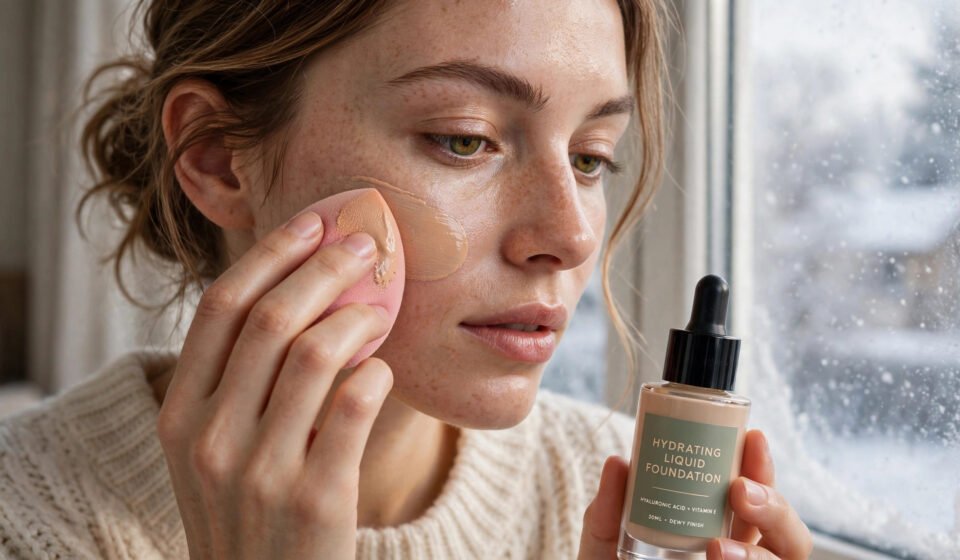

Winter foundation for dry skin is a different game from summer foundation. In summer, the challenge is shine and melting. In winter, the challenge is dryness: foundation that looked smooth at 9 am can look cakey, patchy, and flaky by afternoon, settling into fine lines and clinging to dry patches you did not even know you had. The good news is that cakey winter makeup is usually fixable without buying a whole new makeup bag — it comes down to prep, formula choice, thin application, and smart setting. This guide covers all of it, step by step, so your winter foundation for dry skin actually looks like skin all day.
Why Winter Foundation for Dry Skin Looks Cakey
Winter foundation for dry skin looks cakey because cold air outside and heated air inside both pull moisture out of the skin. When skin is dehydrated, its surface becomes rough and flaky, and foundation sits on top of those flakes instead of blending into smooth skin. Matte and long-wear formulas make this worse: they are designed to stay put and absorb oil, so on dry skin they can look stiff, dry, and mask-like. Another common cause is applying too much product at once. A thick layer of foundation cannot flex with dry skin as it moves, so it cracks and separates during the day. Finally, skipping moisturiser — or applying foundation over moisturiser that has not sunk in yet — both cause problems: dry skin with no moisture base looks patchy, while wet moisturiser under foundation makes it slide and pill. Understanding these causes is the first step to fixing winter foundation for dry skin, because each one has a simple, specific fix.
Winter Foundation for Dry Skin Starts With Prep
Prep is where winter foundation for dry skin is won or lost. Start with a gentle cleanse — a creamy or non-foaming cleanser that does not strip natural oils — then apply a hydrating serum with hyaluronic acid or glycerin while skin is still slightly damp. Next, apply a rich moisturiser and wait two to three minutes for it to sink in completely. This waiting step matters more than most people realise: foundation applied over wet moisturiser slides, while foundation applied over absorbed moisturiser grips smoothly. In the morning, add sunscreen after moisturiser, since winter sun still damages skin even when it feels cold. If your skin is very dry, a hydrating primer after moisturiser gives foundation an extra smooth surface to sit on. Think of prep as building a smooth, hydrated canvas: without it, even the best winter foundation for dry skin will struggle, and with it, even a mid-priced foundation can look beautiful. For a complete barrier-first routine, read our Winter Skin Barrier Routine.
Choosing the Right Winter Foundation for Dry Skin Formula
Formula choice is the second big decision for winter foundation for dry skin. In general, liquid, cream, and serum foundations work better than matte or powder foundations in winter, because they add moisture instead of absorbing it. A hydrating liquid foundation with a satin or dewy finish is the safest choice for most dry skin: it evens tone without looking flat. Cream foundations give more coverage and a skin-like finish, and they are excellent for very dry skin, as long as they are applied thinly. Serum foundations are lighter and more sheer, ideal if you want a natural look and your skin needs only light evening-out. Avoid heavy matte long-wear foundations and powder foundations on very dry days, as they tend to emphasise flakes. Shade also matters in winter: skin is usually lighter than in summer, so check your shade in natural light and go a touch lighter if your summer shade now looks orange or dark against your neck.
How to Apply Winter Foundation for Dry Skin in Thin Layers
Application technique makes a huge difference for winter foundation for dry skin. Apply in thin layers, not one thick layer. Start with a small amount — about a pea-sized dot — and press it into the skin with a damp sponge, rather than buffing it in circles with a brush. Pressing keeps the product from lifting dry flakes, while buffing can roll them up and make them more visible. Build coverage only where you need it: a thin layer all over, then a tiny extra tap on redness or blemishes. Use a damp sponge because it sheers the product out and adds a little moisture at the same time. If you prefer fingers, warm the foundation between your fingertips first so it melts into the skin more easily. The goal for winter foundation for dry skin is not full coverage at all costs — it is even, skin-like coverage that moves with your face and does not crack by afternoon.
Powder and Setting for Winter Foundation for Dry Skin
Setting is where many people accidentally ruin good winter foundation for dry skin. Heavy powder all over the face makes dry skin look drier, older, and more textured. Instead, skip powder altogether if you can, or set only the centre of the face — forehead, nose, and chin — with a very light dusting of translucent powder using a small fluffy brush. Leave the cheeks and under-eyes unpowdered so they keep a natural glow. Finish with a hydrating setting spray, sprayed from arm’s length and left to dry naturally. A hydrating spray melts powder into the skin, removes any chalky look, and adds a light layer of moisture that helps winter foundation for dry skin last longer. Avoid strong matte setting sprays in winter, as they can make dry skin feel tight and look flat. The right setting routine is light, local, and hydrating — not heavy, global, and matte.
Midday Fixes for Winter Foundation for Dry Skin
Even with perfect prep, winter foundation for dry skin can need a midday fix, especially after hours in heated rooms. The mistake to avoid is adding more powder or more foundation over a dry patch — that only makes caking worse. Instead, mist your face lightly with a facial mist or press a tiny amount of moisturiser over the dry area, wait a minute for it to sink in, then tap a very small amount of foundation or concealer over it with a fingertip or damp sponge. This rehydrates the patch first, so the new product blends in instead of sitting on top of flakes. For the under-eye area, use the same trick with a dot of eye cream before concealer. Carry a small facial mist and a creamy concealer in your bag in winter, and you can fix winter foundation for dry skin in under a minute without redoing your whole face.
Mistakes to Avoid With Winter Foundation for Dry Skin
Several common mistakes make winter foundation for dry skin look worse. First, skipping moisturiser because you think foundation will hydrate enough on its own — it will not, and dry skin without a moisture base always looks patchy. Second, using too many layers: primer plus thick foundation plus concealer all over plus powder is a recipe for caking, especially in cold air. Third, aggressive exfoliation the morning you do makeup: over-exfoliated skin is raw and flaky, and foundation will cling to it. Exfoliate gently, and not on the same morning as an important event if your skin is sensitive. Fourth, sticking with a heavy matte foundation just because it worked in summer — winter skin needs a different formula. Fifth, forgetting lip and hand care: cracked lips and dry hands make even perfect winter foundation for dry skin look unfinished, so keep balm and hand cream in your routine too.
Frequently Asked Questions About Winter Foundation for Dry Skin
What is the best winter foundation for dry skin?
A hydrating liquid or cream foundation with a satin or dewy finish is usually best for winter foundation for dry skin. Look for words like hydrating, luminous, or serum on the label, and avoid heavy matte or powder formulas on very dry days.
Should I use primer with winter foundation for dry skin?
Yes, a hydrating primer helps winter foundation for dry skin grip smoothly and last longer. Apply it after moisturiser has sunk in, and keep it thin — a pea-sized amount is enough for the whole face.
How do I stop winter foundation for dry skin from looking cakey by afternoon?
Use thin layers, moisturise well first, set only the centre of the face lightly, finish with a hydrating setting spray, and fix dry patches with mist and a tiny tap of product instead of more powder.
Conclusion
Winter foundation for dry skin does not have to look cakey. With good prep, a hydrating formula, thin pressed layers, light setting, and gentle midday fixes, your foundation can look smooth, natural, and skin-like from morning to night — even in the coldest, driest weather. The secret is not more product, but the right product applied the right way: hydrate first, apply thin, set light, and let your skin, not your makeup, do the glowing. For more makeup guidance, visit Daily Makeup Tip.