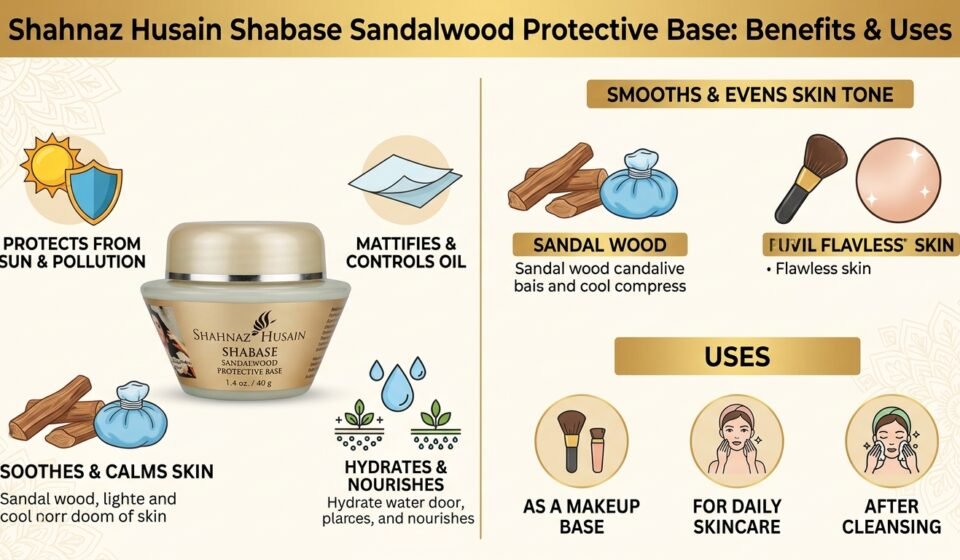

Shahnaz Husain Shabase Sandalwood Protective Base is a herbal skincare product designed to provide a protective layer while helping keep the skin moisturized and comfortable. Its sandalwood-based formulation has made it a popular choice among people looking for traditional herbal-inspired skincare, particularly for skin that is prone to pimples, irritation, or environmental stress.
A protective base can be useful in a daily skincare routine because the skin is regularly exposed to dust, pollution, dryness, sunlight, and other environmental factors. Shabase is positioned as a product that can be used as a protective covering cream and as a base before makeup.
This guide covers the product’s purpose, ingredients, potential skincare benefits, application routine, skin-type considerations, makeup use, precautions, and practical buying tips.
What Is Shahnaz Husain Shabase?
Shahnaz Husain Shabase is a sandalwood protective base formulated for facial skincare. The product is associated with the Shahnaz Husain Ayurvedic and herbal beauty-care range.
The formula combines sandalwood oil with several botanical and mineral-based ingredients. The current brand listing includes ingredients such as rose water, sandalwood oil, Mahuwa extract, castor oil, purified gairika, zinc-based mineral material, sunflower extract, carrot seed extract, cucumber extract, aloe vera juice, and a cream base.
The product is intended to provide a protective covering for the skin while supporting a smoother and more moisturized appearance.
Unlike a conventional foundation, Shabase is primarily positioned as a skincare product rather than a traditional color-cosmetic base. It can also be incorporated into a makeup-preparation routine.
Shahnaz Husain Shabase Sandalwood Protective Base Benefits
There are several reasons this type of protective base can appeal to people who prefer herbal skincare.
1. Provides a Protective Skin Layer
One of the main purposes of Shabase is creating a protective covering over the skin. This can be particularly useful when your daily routine exposes your face to dust, pollution, dry air, or other environmental conditions.
A protective cream can also help reduce the feeling of dryness by leaving the skin with a moisturized surface.
2. Contains Sandalwood
Sandalwood is one of the recognizable ingredients associated with the Shabase formulation.
Sandalwood has a long history in traditional Indian beauty practices and is commonly used in herbal skincare preparations. Its presence gives Shabase its distinctive sandalwood-based character.
3. Designed for Problem-Prone Skin
The product is marketed for skin that may be prone to pimples, eruptions, irritation, or rash.
However, it is important to understand the difference between a cosmetic skincare product and a medically prescribed acne treatment. If you have persistent, painful, or severe acne, professional dermatological advice may be more appropriate than relying on a cosmetic protective base alone.
4. Helps Maintain Skin Moisture
Shabase is also designed to moisturize the skin.
Maintaining adequate moisture is important because overly dry skin can feel tight, rough, or uncomfortable. A suitable moisturizing layer can help support a more comfortable skincare routine.
5. Can Be Used Before Makeup
Another useful feature is its potential role as a makeup-preparation layer.
A thin application can be incorporated into a skincare routine before foundation or other complexion products. Allowing skincare products to settle before applying makeup can help create a smoother preparation step.
6. Herbal-Inspired Skincare Approach
Shahnaz Husain products are strongly associated with Ayurvedic and herbal beauty traditions. Shabase follows this overall product philosophy by combining botanical extracts, sandalwood, and other ingredients in a facial-care formulation.
People who enjoy traditional beauty rituals may find this style of product particularly appealing.
Shahnaz Husain Shabase Ingredients
The current product information lists several ingredients in the formulation.
| Ingredient | Role in the Formula |
|---|---|
| Rose Water | Provides a traditional soothing and refreshing component |
| Sandalwood Oil | Key sandalwood-based ingredient |
| Mahuwa Extract | Botanical extract used in the formulation |
| Castor Oil | Emollient component |
| Gairika | Mineral ingredient used in traditional formulations |
| Zinc-Based Mineral Ingredient | Included as part of the protective formulation |
| Sunflower Extract | Botanical ingredient |
| Carrot Seed Extract | Plant-derived ingredient |
| Cucumber Extract | Commonly associated with refreshing skincare |
| Aloe Vera Juice | Botanical skincare ingredient |
| Cream Base | Provides the product’s final base |
Ingredient lists can change between product versions or markets, so checking the packaging or the manufacturer’s current listing before purchasing is always recommended.
Shabase for Acne-Prone Skin
Shabase is frequently searched for by people interested in skincare for acne-prone or pimple-prone skin.
The product is marketed as a protective base for skin affected by pimples and irritation. However, it should not automatically be considered a replacement for clinically established acne treatments.
Acne can have many causes, including excess oil, clogged pores, hormonal changes, inflammation, and genetics. A cosmetic protective product may complement a skincare routine, but persistent acne may require ingredients or treatments specifically recommended by a dermatologist.
If you experience painful cysts, widespread breakouts, scarring, or acne that does not improve with basic skincare, professional advice is worth considering.
Shabase for Oily Skin
People with oily skin often want products that provide protection without leaving the face feeling excessively heavy.
Shabase is sometimes used alongside products intended for normal-to-oily skin. The brand’s product information specifically mentions combining Shabase with Shasilk for normal-to-oily skin.
If your skin becomes shiny quickly, start with a small amount rather than applying a thick layer. Skincare should feel comfortable rather than excessively greasy.
Shabase for Dry Skin
Dry skin generally benefits from a routine that prioritizes gentle cleansing and moisture.
For normal-to-dry skin, the brand recommends using Shabase with Shamoist. Combining products should be done according to your skin’s needs rather than automatically layering several heavy creams.
If your face feels tight after cleansing, a moisturizer underneath or alongside a protective product may make the routine more comfortable.
Shahnaz Husain Shabase as a Makeup Base
Shabase can also be used as part of a makeup-preparation routine.
A simple routine can look like this:
- Cleanse the face gently.
- Pat the skin dry.
- Apply your usual skincare products.
- Use a small amount of Shabase.
- Spread it evenly across the face.
- Allow the product to settle.
- Apply foundation, BB cream, or other makeup if desired.
Avoid applying a very thick layer underneath makeup. Excess product can make complexion products feel heavier or affect the way foundation sits on the skin.
For daytime makeup, sunscreen should remain an important part of your routine. A cosmetic protective base should not automatically be treated as a substitute for a dedicated broad-spectrum sunscreen.
Shabase Application Routine
The manufacturer’s current product information recommends applying Shabase to the face and leaving it on. The brand also provides different pairing recommendations based on skin type.
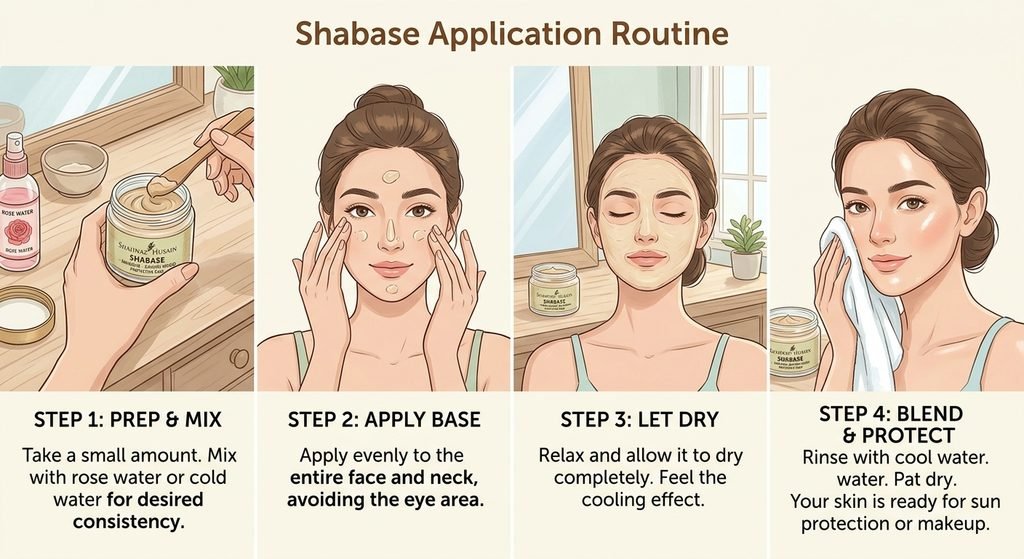
For a simple routine:
Step 1: Cleanse
Start with a gentle facial cleanser suitable for your skin type.
Step 2: Dry Gently
Use a clean towel and pat rather than aggressively rubbing the skin.
Step 3: Apply a Small Amount
Take a small quantity of Shabase and distribute it across the face.
Step 4: Spread Evenly
Use gentle movements to create a thin, even layer.
Step 5: Let It Set
Allow the product to settle before applying additional skincare or makeup.
The ideal amount depends on your skin and the rest of your routine. More product does not necessarily mean better results.
Is Shabase Suitable for Every Skin Type?
The manufacturer describes the current Shabase formulation as suitable for all skin types. Individual skin reactions can still vary.
| Skin Type | General Consideration |
|---|---|
| Normal | Can be used as a protective skincare layer |
| Dry | May be paired with additional moisturizing care |
| Oily | Use a thin layer and monitor how the skin feels |
| Combination | Adjust application according to dry and oily areas |
| Acne-Prone | Product is marketed for acne- and pimple-prone skin, but severe acne may require dermatological treatment |
| Sensitive | Patch testing is especially important |
Skin type is only one factor. Ingredient sensitivities, allergies, current treatments, climate, and other skincare products can also influence compatibility.
Shabase vs. Traditional Foundation
Shabase and foundation serve different primary purposes.
A foundation is generally designed to provide cosmetic coverage and modify the appearance of the complexion. Shabase is primarily positioned as a protective skincare base.
That means Shabase should not be expected to provide the same level of pigmentation as a conventional foundation.
For a natural makeup routine, Shabase can be used as part of the preparation stage, followed by a complexion product if additional coverage is desired.
Shabase and Daily Skincare
A simple skincare routine does not need to contain dozens of products.
A practical routine can include:
Morning
- Gentle cleanser
- Hydrating product if needed
- Shabase or another suitable skincare product
- Broad-spectrum sunscreen
- Makeup, if desired
Evening
- Makeup removal if necessary
- Gentle cleanser
- Targeted skincare treatment if recommended
- Moisturizer or appropriate night-care product
The best routine is usually one that is consistent and appropriate for your individual skin needs.
Patch Testing Shabase
Before introducing any new skincare product, especially one containing multiple botanical and cosmetic ingredients, patch testing is a sensible precaution.
Apply a small amount to a limited area according to your preferred patch-testing practice and monitor your skin for signs of irritation.
Stop using the product if you experience significant burning, swelling, severe redness, or another concerning reaction.
People with known ingredient allergies should carefully review the ingredient list before use.
Shabase Safety Tips
Keep the following points in mind:
- For external use only.
- Avoid direct contact with the eyes.
- Check the current ingredient list before use.
- Perform a patch test when trying the product for the first time.
- Stop using it if significant irritation develops.
- Keep the container properly closed.
- Store skincare according to the manufacturer’s instructions.
- Do not use expired or visibly altered products.
- If you have a diagnosed skin condition, ask a dermatologist before changing your treatment routine.
Shahnaz Husain Shabase Price
The price of Shabase can vary depending on the country, retailer, package size, taxes, shipping costs, promotions, and product version.
The official Indian product listing currently displays a 40g + 10g promotional pack, while U.S. distribution listings may use different packaging and pricing.
Because beauty-product prices change frequently, checking the retailer’s current product page before purchasing is more reliable than depending on an old price mentioned in a blog post.
Where to Buy Shahnaz Husain Shabase
Shabase can be found through Shahnaz Husain’s official channels and selected retailers.
When purchasing skincare online, pay attention to:
- Seller reputation
- Product packaging
- Ingredient information
- Manufacturing information
- Expiration or best-before information
- Return policy
- Shipping conditions
- Country-specific packaging
Buying from an established or authorized source can also reduce the risk of receiving a questionable product.
Shahnaz Husain Shabase for a Natural Beauty Routine
A major attraction of herbal-inspired skincare is the ability to keep a beauty routine relatively simple.
Shabase can fit into a natural-looking routine where the goal is comfortable, moisturized skin rather than heavy coverage.
For example, a simple daytime look might include a gentle cleanser, moisturizer if needed, Shabase, sunscreen, light concealer, mascara, lip color, and a small amount of powder.
This approach can create a polished appearance without requiring a full-coverage makeup routine.
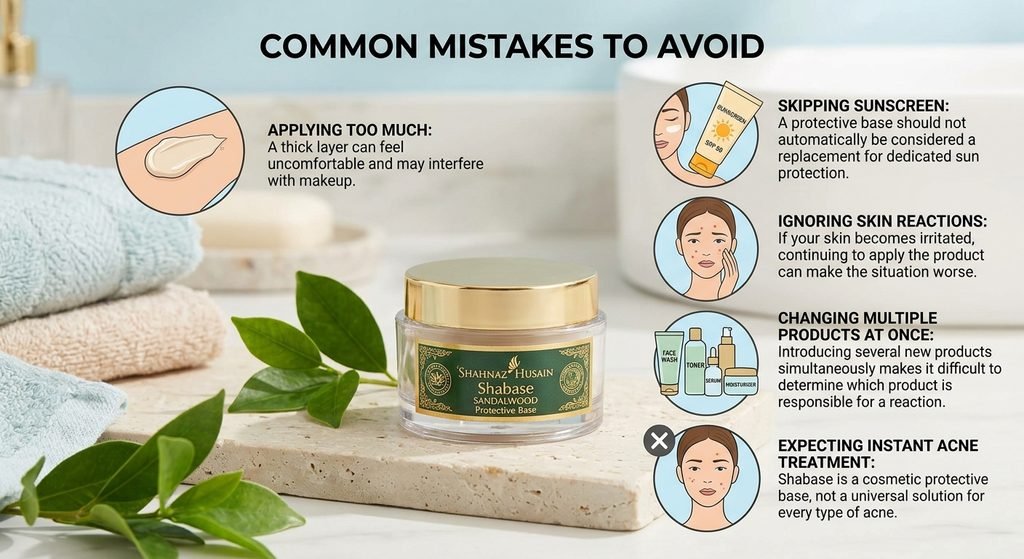
Common Mistakes to Avoid
Even a well-designed skincare product can be used incorrectly.
Applying Too Much
A thick layer can feel uncomfortable and may interfere with makeup.
Skipping Sunscreen
A protective base should not automatically be considered a replacement for dedicated sun protection.
Ignoring Skin Reactions
If your skin becomes irritated, continuing to apply the product can make the situation worse.
Changing Multiple Products at Once
Introducing several new products simultaneously makes it difficult to determine which product is responsible for a reaction.
Expecting Instant Acne Treatment
Shabase is a cosmetic protective base, not a universal solution for every type of acne.
Frequently Asked Questions
Is Shahnaz Husain Shabase good for acne-prone skin?
The product is specifically marketed as a protective base for skin prone to acne, pimples, irritation, and rash. However, people with persistent or severe acne should consider professional dermatological advice.
Can Shabase be used under makeup?
Yes. The product is positioned as a base that can be used before makeup. Applying a thin layer and allowing it to settle can make it easier to layer complexion products afterward.
Does Shabase contain sandalwood?
Yes. Sandalwood oil is listed among the ingredients in the current official product information.
Is Shabase a sunscreen?
It should not be treated as a replacement for dedicated sunscreen. For daytime exposure, use a broad-spectrum sunscreen appropriate for your skin.
Can dry skin use Shabase?
The product is described as suitable for all skin types, and the brand recommends pairing it with Shamoist for normal-to-dry skin.
Can oily skin use Shabase?
Yes, the brand’s product information specifically discusses using Shabase with Shasilk for normal-to-oily skin. Start with a thin layer and adjust according to how your skin responds.
Can Shabase replace foundation?
Not completely. Shabase is primarily a skincare protective base, while foundation is designed to provide cosmetic coverage and color.
Is patch testing necessary?
Patch testing is a sensible precaution before introducing a new skincare product, especially if your skin is sensitive or you have known ingredient allergies.
Final Thoughts
Shahnaz Husain Shabase Sandalwood Protective Base is a herbal-inspired facial product designed around the idea of protecting, moisturizing, and preparing the skin. Its sandalwood-based formulation and combination of botanical ingredients make it particularly interesting to people who prefer traditional Ayurvedic-style beauty products.
It can be incorporated into a simple skincare or makeup-preparation routine, but individual skin compatibility is important. Start with a small amount, pay attention to how your skin responds, and always check the latest ingredient and usage information before applying a new skincare product.
For people dealing with persistent acne, severe irritation, or another ongoing skin concern, a dermatologist can provide more appropriate personalized guidance.