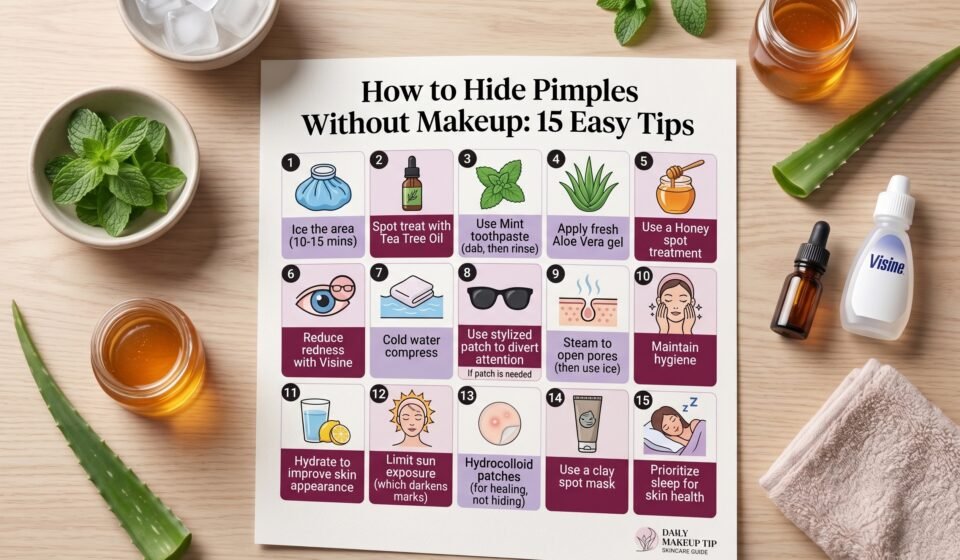

A sudden pimple can appear at the worst possible time—before a date, important event, photos, work, or simply on a day when you want your skin to look its best. If you don’t want to use foundation or concealer, you may be wondering how to hide pimples without makeup.
While there is no safe method that can instantly erase a pimple, you can make a blemish look less red, swollen, and noticeable by taking gentle care of your skin. The goal is not to cover the spot but to reduce irritation and support the skin while the blemish heals.
Dermatologists recommend avoiding aggressive scrubbing and resisting the urge to squeeze or pop pimples because picking can increase inflammation and raise the risk of scarring and dark marks.
In this guide, you’ll find practical ways to make pimples less noticeable without foundation, concealer, or other traditional makeup.
Can You Hide a Pimple Without Makeup?
Yes, you can make a pimple less noticeable without applying makeup, although you cannot instantly remove it.
A pimple may look more obvious because of:
- Redness
- Swelling
- Inflammation
- Dry or flaky skin
- A visible whitehead
- Irritation from touching or picking
Reducing these factors can make the blemish appear calmer.
The American Academy of Dermatology recommends gentle skin care and advises people not to pick, pop, or squeeze acne because doing so can worsen inflammation and increase the chance of scarring or dark spots.
1. Use a Gentle Cleanser
One of the easiest ways to care for a visible pimple is to keep your cleansing routine simple.
Wash your face gently with a mild cleanser and lukewarm water. Avoid harsh scrubbing, rough washcloths, or repeatedly washing the same area.
According to dermatologists, acne-prone skin can become irritated when it is cleansed too aggressively. The American Academy of Dermatology recommends washing gently and avoiding abrasive techniques.
Try this simple routine:
- Wet your face with lukewarm water.
- Apply a gentle cleanser with your fingertips.
- Massage lightly without scrubbing.
- Rinse thoroughly.
- Pat your skin dry with a clean towel.
Clean skin will not make a pimple disappear instantly, but gentle cleansing can help prevent additional irritation.
2. Try a Hydrocolloid Pimple Patch
If you want to avoid makeup but still want to make a pimple less noticeable, a hydrocolloid acne patch can be useful.
Hydrocolloid patches can cover and protect a blemish without using foundation or concealer. The American Academy of Dermatology notes that hydrocolloid acne patches can protect the skin and support healing, particularly for surface-level pimples.
They can also act as a physical reminder not to touch or pick the spot.
For best results:
- Apply the patch to clean, dry skin.
- Follow the product’s instructions.
- Avoid repeatedly touching the patch.
- Replace it according to the manufacturer’s directions.
Some patches are nearly transparent, while others are more visible. If appearance is important, look for a thin patch designed for daytime wear.
3. Reduce Redness With a Cool Compress
If your pimple looks particularly red or swollen, a cool compress may help temporarily make the area appear calmer.
Wrap something cool in a clean, soft cloth and gently place it over the area for a short period.
Do not put ice directly against your skin.
The purpose is to soothe the area rather than aggressively freeze or irritate it.
If the pimple is deep and painful, dermatologists may recommend a warm, damp washcloth for 10–15 minutes, repeated up to three times daily, to help the deep blemish move closer to the skin’s surface.
4. Don’t Pop or Squeeze the Pimple
This may be the hardest tip to follow, especially when a whitehead is visible.
However, squeezing can make the blemish more inflamed and noticeable.
The NHS advises against squeezing spots because it can worsen acne and contribute to permanent scarring.
The American Academy of Dermatology similarly recommends keeping your hands off deep, painful pimples because picking or squeezing can increase the risk of infection, discoloration, and scarring.
Instead of squeezing:
- Leave the pimple alone.
- Use a suitable acne treatment.
- Consider a hydrocolloid patch.
- Keep your hands away from your face.
Sometimes doing less is actually better for irritated skin.
5. Keep Your Skin Moisturized
A visible pimple can look even more obvious when the surrounding skin is dry, flaky, or irritated.
Use a gentle moisturizer that suits your skin type. If you’re acne-prone, look for products labeled:
- Non-comedogenic
- Oil-free
- Won’t clog pores
The American Academy of Dermatology recommends choosing non-comedogenic or oil-free products for acne-prone skin.
A properly moisturized skin barrier can also make dry patches around blemishes look less noticeable.
6. Use an Acne Treatment Instead of Makeup
If your goal is not just to cover the pimple but also to help it improve, an appropriate acne treatment may be more useful than makeup.
The American Academy of Dermatology lists several ingredients commonly used to treat acne, including:
- Benzoyl peroxide
- Salicylic acid
- Adapalene
- Azelaic acid
Different ingredients target acne in different ways, so choosing a product depends on the type of breakout and your skin’s needs.
Use acne treatments according to the product directions. Applying too much can irritate the skin rather than making the blemish look better.
7. Wear Sunscreen Every Day
If you are trying to make a pimple less noticeable, protecting your skin from the sun is still important.
Inflammation can contribute to dark marks after acne heals. The American Academy of Dermatology recommends broad-spectrum, water-resistant sunscreen with SPF 30 or higher, preferably labeled non-comedogenic for acne-prone skin.
Choose a sunscreen that feels comfortable enough for daily use so you are more likely to apply it consistently.
8. Keep Your Hair Away From Your Face
Hair can sometimes make facial breakouts more noticeable, particularly around the forehead and temples.
Hair products can also contribute to clogged pores for some people.
If your hair becomes oily quickly, consider keeping it away from your face and washing it regularly. The American Academy of Dermatology notes that oil from hair can contribute to forehead acne.
A simple hairstyle can also draw attention away from a blemish without requiring makeup.
9. Keep Your Pillowcase Clean
Your face spends hours against your pillowcase while you sleep.
Keeping bedding clean is a sensible part of general skin hygiene, particularly if your skin becomes oily or you use hair and skincare products at night.
Instead of obsessively changing your bedding every day, focus on maintaining a regular washing routine and keeping products such as heavy hair oils away from areas that directly contact your face.
10. Avoid Touching Your Face
Touching a pimple throughout the day can increase irritation.
Common habits include:
- Resting your chin on your hand
- Picking at a whitehead
- Checking the pimple repeatedly
- Scratching flaky skin
- Pressing the area to see if it still hurts
The American Academy of Dermatology recommends resisting touching, picking, and popping acne because these behaviors can worsen breakouts and increase the risk of scarring and dark spots.
If you notice yourself touching your face frequently, keeping your hands occupied can help break the habit.
11. Use Lighting to Your Advantage
If your main goal is simply to make a pimple less noticeable, lighting can make a surprising difference.
Strong overhead lighting can emphasize texture, shadows, and redness.
For photos or video calls:
- Face a soft light source.
- Avoid extremely harsh overhead lighting.
- Use natural indirect light when possible.
- Position the light slightly in front of you.
This doesn’t change the pimple itself, but it can make facial texture appear softer.
12. Choose a Simple Hairstyle
If you have a noticeable blemish near your forehead or cheek, changing your hairstyle can naturally shift attention.
For example, you could try:
- A side part
- Loose waves
- A simple ponytail
- Hair tucked behind one ear
- Face-framing layers
Avoid using heavy or oily hair products directly around acne-prone areas, especially if you notice that they contribute to breakouts.
13. Don’t Use Toothpaste on Pimples
Toothpaste is one of the most common DIY suggestions found online for drying out pimples.
It’s better to skip it.
The NHS specifically warns that using toothpaste on acne can irritate and damage the skin and recommends safer, more appropriate acne treatments instead.
A product formulated specifically for acne is a much more sensible choice than putting toothpaste on your face.
14. Avoid Harsh Scrubs
When you see a pimple, you may feel tempted to scrub the area until it feels completely clean.
That’s usually counterproductive.
Scrubbing can irritate acne-prone skin and make inflammation more noticeable. Dermatologists recommend gentle cleansing rather than aggressive exfoliation.
Your skin doesn’t need to feel squeaky clean to be clean.
15. Give Your Skin Time to Heal
One of the most important tips for hiding pimples without makeup is also one of the simplest: give the blemish time.
Acne treatments generally don’t work overnight. The American Academy of Dermatology notes that some acne treatments may require several weeks before improvement becomes noticeable.
Trying multiple products every few days can irritate your skin and potentially make things worse.
Instead:
- Choose an appropriate routine.
- Follow the directions.
- Avoid picking.
- Be consistent.
- Give your skin time.
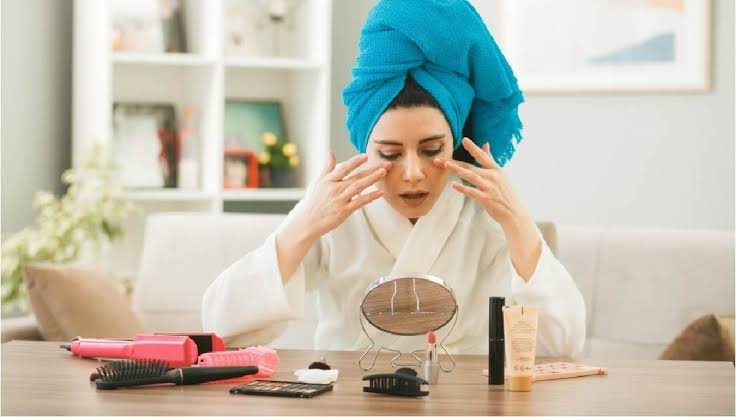
Quick Routine to Make a Pimple Less Noticeable Without Makeup
If you need a simple routine before leaving the house, try this:
| Step | What to Do |
|---|---|
| 1 | Gently cleanse your face |
| 2 | Pat dry without rubbing |
| 3 | Apply an appropriate acne treatment if needed |
| 4 | Use a lightweight, non-comedogenic moisturizer |
| 5 | Apply non-comedogenic SPF 30+ |
| 6 | Use a hydrocolloid patch if appropriate |
| 7 | Avoid touching or squeezing the blemish |
This approach focuses on calming and protecting the skin rather than trying to cover it.
Things to Avoid When Trying to Hide Pimples Naturally
Not every viral skincare trick is a good idea.
Avoid putting irritating household products on your skin, especially around an inflamed blemish.
Avoid:
- Toothpaste
- Lemon juice
- Harsh alcohol
- Baking soda
- Rough scrubs
- Picking
- Squeezing
- Excessive washing
- Multiple new acne products at once
The goal should be to reduce irritation, not create more of it.
How to Hide Pimples Without Makeup Overnight
If you have a pimple before an important event, you may want a quick overnight solution.
A reasonable routine is:
At Night
1. Cleanse gently.
Remove sweat, dirt, sunscreen, and skincare residue.
2. Apply an appropriate acne treatment.
Use a product containing an acne-fighting ingredient suitable for your skin.
3. Consider a hydrocolloid patch.
A patch can protect the area from touching while you sleep. Dermatologists recognize hydrocolloid patches as an option for protecting surface-level pimples.
4. Leave the blemish alone.
Don’t squeeze it before bed.
In the Morning
Gently cleanse, moisturize, and apply non-comedogenic sunscreen.
Your pimple may still be present, but reducing irritation and swelling can make it less noticeable.
When Should You See a Dermatologist?
Occasional pimples are common, but some types of acne need professional treatment.
Consider seeing a dermatologist if:
- You regularly develop deep, painful pimples.
- Acne is leaving scars.
- Breakouts aren’t improving with appropriate over-the-counter treatment.
- Acne is becoming widespread.
- Your acne is significantly affecting your confidence or daily life.
The American Academy of Dermatology recommends professional evaluation for deep or painful acne and acne that doesn’t improve with over-the-counter treatment.
Frequently Asked Questions
How can I hide a pimple without makeup?
You can make a pimple less noticeable by reducing irritation, using a hydrocolloid patch, keeping the surrounding skin moisturized, protecting your skin from the sun, and avoiding touching or squeezing the area.
How can I make a pimple look less red?
Keeping the area calm and avoiding irritation can help. A cool compress may temporarily soothe a swollen area. For deep, painful pimples, dermatologists may recommend a warm, damp washcloth for 10–15 minutes.
**Can toothpaste hide pimples?
No. Toothpaste is not a recommended acne treatment and can irritate or damage facial skin. The NHS specifically advises against using toothpaste on pimples.
Does squeezing a pimple make it disappear faster?
Not necessarily. Squeezing can worsen inflammation and increase the risk of scarring and dark marks. Dermatologists recommend leaving pimples alone rather than popping them.
Can a pimple patch be used without makeup?
Yes. Hydrocolloid acne patches can be used on clean skin without foundation or concealer. They can protect the blemish and may support healing.
Can I prevent pimples completely?
There is no guaranteed way to prevent every breakout. However, a consistent skincare routine, appropriate acne treatment, non-comedogenic products, and avoiding picking can help manage acne.
Final Thoughts
Learning how to hide pimples without makeup doesn’t have to involve complicated beauty hacks. In many cases, the best approach is to make the skin look calmer rather than trying to completely conceal the blemish.
Gentle cleansing, appropriate acne treatments, hydrocolloid patches, moisturizer, sunscreen, and keeping your hands away from your face can all be useful parts of a simple routine.
Most importantly, don’t let one pimple convince you that your skin has to look perfect. Breakouts are common, and trying to aggressively remove them can sometimes leave a longer-lasting mark than the original blemish.
Calm skin, gentle care, and consistency usually beat aggressive DIY fixes.