
Quick Answer
How do you make makeup last in hot humid weather in 2026? Keep every layer thin, let each layer dry before the next one, and set as you go. Use a gel moisturizer, a grip or mattifying primer on the T-zone, a long-wear foundation pressed in with a damp sponge, a light dusting of translucent powder, waterproof eye products, and a long-wear setting spray as the final seal. Blot sweat and oil during the day instead of piling on more product, and your makeup can genuinely survive 8 to 10 hours of heat and humidity.
I’ve spent enough summers watching my foundation slide off by noon to know that humidity is not a small problem — it is the whole problem. Heat makes your skin produce more oil, humidity adds moisture from the air, and together they dissolve the very products meant to stay put. The good news is that you do not need a heavier routine or a bag full of expensive products. You need a lighter one, built the right way, in the right order. This is the full-face routine I actually use on the stickiest days, and it works.
Table of Contents
Why Makeup Melts in Hot Humid Weather
Before we fix anything, it helps to know what we are fighting. Makeup does not melt because it is bad makeup. It melts because of three things happening at once, and all three get worse when the air is hot and wet.
First, heat wakes up your oil glands. Your skin produces more sebum, and that oil sits under your foundation and slowly pushes it apart. Second, humidity is moisture in the air, and it softens every cream and liquid layer from above. Third, sweat adds salt water from underneath. Oil from below, moisture from above, sweat from within — that is why a routine that lasts all day in an air-conditioned room can fall apart in twenty minutes outside.
Heavy makeup fails fastest in these conditions, which feels backwards. You would think more product means more coverage for longer, but thick layers have nothing to grip. They sit on top of the skin like a mask, and the first bead of sweat lifts the whole thing. Thin layers, on the other hand, bond with the skin. Each one dries, sets, and holds the next. That single idea — thin beats thick — is the foundation of everything that follows.
Your skin type matters too. If you are oily, humidity is your biggest enemy, because your skin is already producing the thing that breaks makeup down. If you are dry, you might think you are safe, but sweat still softens your base, and heavy creams under makeup will slide just as fast. Combination skin gets the worst of both: a shiny T-zone and dry cheeks that grab foundation unevenly. The routine below is built to work for all three, with small notes where oily or dry skin needs a different touch.
How to Make Makeup Last in Hot Humid Weather 2026: The 5-Step Sweat-Proof Routine
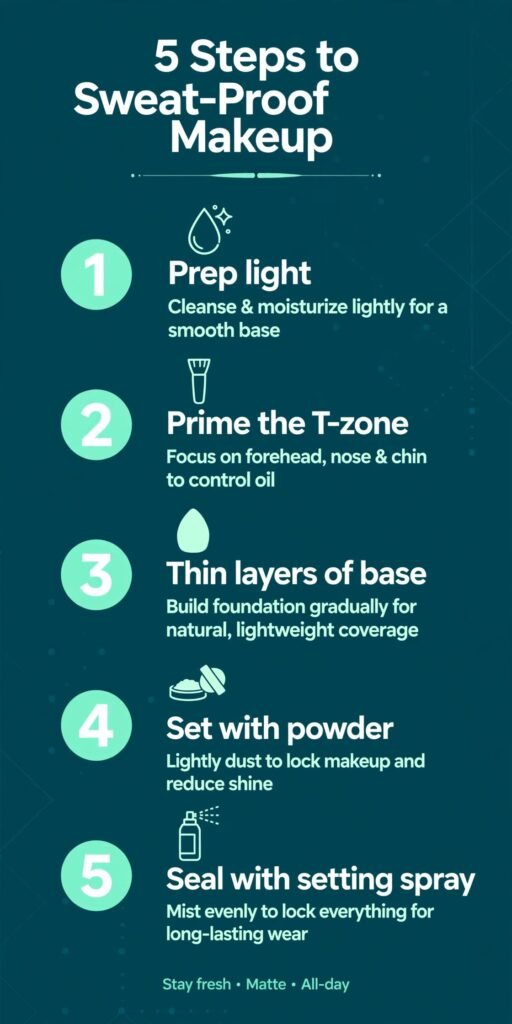
If you remember nothing else from this article, remember these five steps. They are the skeleton of the whole routine, and every detailed section below is just these steps explained properly.
- Prep light. Cleanse, then use a gel or water-based moisturizer and a lightweight, sweat-resistant sunscreen. Let every layer dry completely before the next one — this is the step most people rush, and it costs them the whole day.
- Prime only where you need it. A mattifying or grip primer on the T-zone, eyelids, and anywhere your makeup breaks down first. Skip the cheeks unless they get oily too.
- Build the base in thin layers. A long-wear or sweat-resistant foundation pressed in with a damp sponge, concealer only where needed, and a light press of translucent powder on the oily zones.
- Set as you go. Layer powder over cream — powder blush over cream blush, powder bronzer over cream bronzer — and mist setting spray between layers, not just at the end.
- Seal and blot, never reapply. Finish with a long-wear setting spray in an X and T motion, then blot oil and sweat with blotting paper during the day instead of adding more foundation.
Step 1: Prep Light — Your Skin Is the Real Base
Good makeup starts before makeup. I know that sounds like something printed on a poster, but in humidity it is literally true: if your skin is slick when you start, nothing you put on top will hold.
Start with a gentle cleanse. If you have been sweating already, or you slept in last night’s makeup, wash it all away — leftover product and overnight oil are the first things that will break your base apart. Use a cleanser that refreshes without stripping your skin. If your face feels tight and squeaky after washing, your cleanser is too harsh, and your skin will overproduce oil within the hour to compensate.
Next comes moisturizer, and this is where most humid-weather routines go wrong. Heavy creams feel comforting, but they leave a film that foundation cannot grip. Switch to a gel or water-based moisturizer in summer. It hydrates without adding grease, and it sinks in fast. If your skin is very dry, you can use a richer cream at night and keep the morning light — your skin will still be hydrated from the night before.
Then sunscreen, which you should never skip, even on cloudy humid days. UV rays pass straight through cloud cover, and sunburned skin peels — which takes your makeup with it. Choose a lightweight, fluid or gel sunscreen that dries down matte or natural, and avoid thick creamy SPF formulas that sit on the skin. Pat it in gently rather than rubbing, and wait at least two to three minutes for it to settle. If it has not absorbed, blot the excess with a tissue before you touch primer. That waiting time is not wasted — it is the difference between makeup that grips and makeup that slides.
Step 2: Prime Only Where You Need It
Primer is the step people either skip entirely or use far too much of. In hot humid weather, both mistakes cost you. A good primer gives your foundation something to hold onto, but a full face of it adds a layer that traps heat and oil.
Prime in patches, not all over. Your T-zone — forehead, nose, and chin — is where oil and sweat show up first, so that is where primer earns its keep. A mattifying primer there controls shine, while a grip primer (the kind that feels slightly tacky, like Milk Hydro Grip or e.l.f. Power Grip) helps foundation stick through sweat. If your cheeks stay normal, leave them alone or use a hydrating primer only if they feel tight.
Never skip the eyelids. Eyeshadow creases within the hour in humidity without a base, and no amount of setting spray will save it. A thin eye primer, or even a trace of concealer set with powder, keeps shadow in place all day. The same goes for your lips if you wear bold color: a little primer or foundation patted over the lips before lipstick stops feathering in the heat.
Apply primer with your fingertips and tap it in — do not rub. Then wait a full minute. Primer needs that minute to set and turn tacky. If you rush straight to foundation, you are just mixing two wet layers together, and neither one will do its job.
Step 3: Build the Base in Thin Layers
This is the step that decides your whole day. The rule is simple: thin layers, pressed in, built only where you need coverage. Everything else is detail.
Choose a long-wear, sweat-resistant foundation with a natural or soft-matte finish. Oil-free formulas last longest in humidity, and a serum or skin-tint foundation can work beautifully if you do not need heavy coverage. What you want to avoid is a thick, full-coverage cream foundation — it will look flawless for twenty minutes and then separate into patches as you sweat.
Apply it with a damp makeup sponge, and press it into your skin instead of sweeping or dragging. Pressing pushes the product into the skin so it bonds, and it lifts away the excess that would otherwise slide off. Start with one thin layer all over, then add a second thin layer only where you need more coverage — usually around the nose, chin, and any blemishes. For spots and dark circles, use a lightweight waterproof concealer instead of piling on more foundation. Concealer is more pigmented, so a tiny dot does the work of three layers of foundation.
Under the eyes, less is truly more. Thick concealer creases in heat, especially when you smile and sweat. Use the smallest amount that covers, tap it in with your ring finger or a small brush, wait thirty seconds, and blend only the edges. Then set it immediately with a tiny amount of powder — concealer that is not set in humidity will crease before you leave the house.
If you want the full breakdown of long-wear base products, my guide on how to make foundation last all day goes deeper into formulas and application. The short version is this: thin, pressed, set — in that order.
Step 4: Set as You Go — Powder and Spray Between Layers
Most people save setting products for the very end. In normal weather, that works fine. In hot humid weather, it is not enough. You need to set as you go, sealing each layer before you add the next one.
Start with powder. Press a small amount of finely milled translucent loose powder into the T-zone, the sides of the nose, and the chin using a puff or a small fluffy brush. Press, do not sweep — sweeping moves your foundation around. Leave the cheeks alone unless they get shiny too, because powder dulls the glow that makes skin look alive. A targeted press is a tool; a blanket of powder is a mistake that turns cakey by noon. If you have a trouble zone that always breaks down first, you can bake it: leave a slightly heavier layer of powder there for two or three minutes while you do your eyes, then brush away the excess.
Then comes the trick that makes the biggest difference: layer powder over cream. Whatever your product, apply the cream version first and follow it with the powder version. Liquid foundation, then powder foundation. Cream blush, then powder blush. Cream bronzer, then powder bronzer. The powder locks the cream in place — it is makeup insurance, and in humidity you want all the insurance you can get. Cream products alone melt; powder products alone fade. Together, they hold.
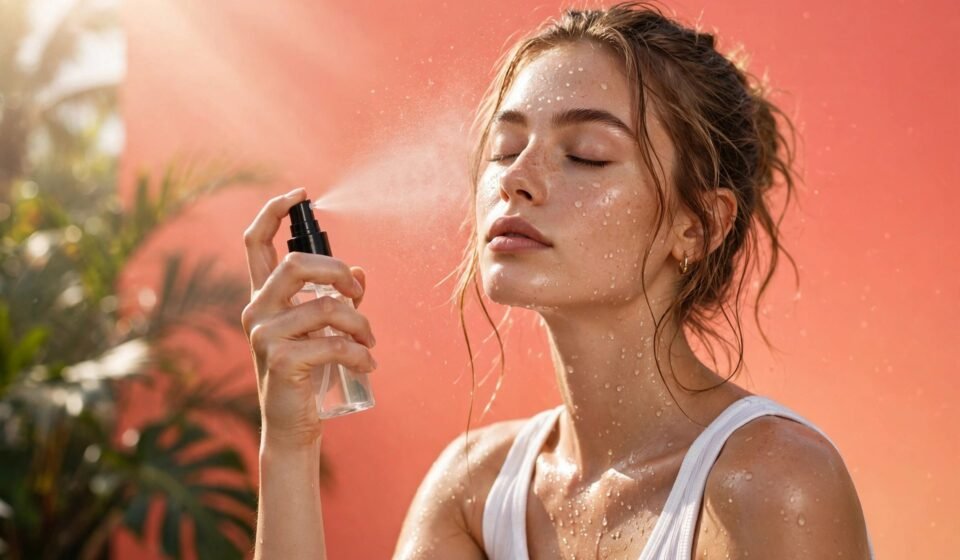
Setting spray works the same way. Instead of one mist at the end, use it between layers. After your base, a light mist. After blush and bronzer, another. This “sandwich” method seals each layer individually, so even if the top layer takes a hit from sweat, the layers underneath are still locked in. Use a long-wear or matte setting spray, hold it eight to ten inches from your face, and mist in an X and then a T shape so the whole face is covered evenly. Let it dry fully before you move on — fanning your face with your hand or a small fan speeds this up and feels wonderful on a hot day.
Step 5: Eyes, Brows, and Lips That Survive the Heat
Color on the eyes and lips actually survives heat better than base makeup — if you choose the right textures. The same thin-layer, set-as-you-go logic applies here too.
For eyes, start with a cream or stick shadow in a neutral shade, blend it with your fingertip, then set it with a matching powder shadow on top. Cream alone creases, powder alone fades, but together they stay put for hours. Keep the look light in humidity — heavy smoky eyes smudge the moment you sweat, and a soft wash of color looks fresher anyway. Waterproof mascara on the top lashes only is the practical choice: lower-lash mascara smudges first in heat, and top-lash-only keeps the look clean. The same goes for eyeliner — waterproof, tightlined or thin, and set with a matching powder shadow so it cannot migrate.
Brows need the same treatment. Humidity relaxes brow gel and softens pencil, so use a waterproof brow pencil or pomade, then set with a clear brow gel or a matching powder. Brush them up, let them set, and do not touch them again. If you want inspiration for long-wear eye looks, my guide on what an eyeshadow palette is and how to use one covers the shades and finishes that work hardest in summer.
Lips are the easiest part of the routine and the most commonly ruined. Creamy lipsticks feather and slide in heat, so switch to a matte liquid lipstick or a long-wear stain for humid days. Line your lips first — a liner that matches your lipstick gives the color a border it cannot cross — then apply the lipstick, blot once with a tissue, and apply a second thin layer. That blot-and-layer trick doubles the wear time of almost any lip product. Keep a tinted lip balm in your bag for touch-ups: it refreshes color without the fuss of reapplying a full lipstick in a steamy bathroom mirror.
How to Make Makeup Last in Hot Humid Weather 2026: Sweat-Proof Products That Work
You do not need to buy a whole new makeup bag for summer. A few smart swaps at the key steps make more difference than ten new products. This table compares the choices that matter most, so you can see at a glance what to reach for and what to leave in the drawer until winter.
| Step | Best Choice for Humidity | Avoid in Humidity | Why It Matters |
|---|---|---|---|
| Moisturizer | Gel or water-based, oil-free | Heavy creams, facial oils | Light hydration sinks in; heavy creams leave a film foundation cannot grip |
| Sunscreen | Fluid or gel SPF, sweat-resistant | Thick creamy SPF | Fluid formulas dry down fast and sit flat under makeup |
| Primer | Mattifying or grip primer, T-zone only | Full-face silicone primer | Targeted primer controls oil where it starts without trapping heat |
| Foundation | Long-wear, oil-free, soft-matte | Thick full-coverage cream | Thin long-wear layers bond with skin; thick layers separate as you sweat |
| Blush and bronzer | Cream then powder, layered | Cream alone, unset | Powder locks cream in place — the single best humidity trick |
| Eyes | Waterproof mascara and liner, cream + powder shadow | Regular mascara, cream shadow alone | Waterproof formulas resist sweat; layered shadows cannot crease |
| Setting spray | Long-wear or matte, used between layers | Dewy spray used once at the end | Sealing each layer individually survives sweat far longer than one final mist |
A quick note on budget: you do not need luxury products for any of this. Drugstore long-wear foundations, grip primers, and setting sprays perform brilliantly in humidity — the technique matters more than the price tag. Spend your money where it counts (a good setting spray and a waterproof mascara) and save everywhere else.
How to Make Makeup Last in Hot Humid Weather 2026 — Touch-Ups That Work
Even the best routine needs a midday rescue in real humidity. The trick is knowing what to do — and what never to do — when your makeup starts to struggle.
First, blot before you do anything else. Press blotting paper or a clean tissue gently onto the shiny areas and lift it away. Do not rub. Rubbing moves your foundation and creates patches. Blotting removes oil and sweat while leaving the makeup underneath intact, and it takes ten seconds. Keep blotting papers in your bag all summer — they are the single most useful touch-up tool you can own.
Second, press powder only where you blotted, and only a tiny amount. Use a puff, press it in, and stop. The mistake people make at this point is reapplying foundation over sweat, which mixes with the moisture on your skin and turns patchy within minutes. Foundation is a morning product, not a touch-up product.
Third, refresh with a mist, not a layer. A light spritz of setting spray or a hydrating face mist over blotted skin revives the makeup and melts the powder back into a skin-like finish. If your eye makeup has creased slightly, smooth it with a clean fingertip and press a little powder shadow over the crease — never add more cream shadow on top of a crease.
Finally, carry a small kit: blotting papers, a travel-size setting spray, a mini powder compact, and your lip product. That is all you need. Four items, one small pouch, and you can handle anything a humid afternoon throws at you.
Mistakes That Melt Your Makeup Faster
Sometimes the fastest way to improve your routine is to stop doing the things that sabotage it. These are the mistakes I see most often, and I have made every single one of them myself.
Applying foundation before your moisturizer or sunscreen is dry is the biggest one. Wet layers never bond — they slide around on the skin and take everything above them with them. Give each layer two to three minutes. Use that time to pick your outfit or make your coffee.
Skipping primer on the T-zone is next. You might not need primer everywhere, but the places that get oily first need it most. And over-powdering the whole face is the opposite error: too much powder looks cakey by itself, and when sweat hits it, it goes patchy. Powder is a targeted tool, not a blanket.
Using heavy creams under matte products is a quiet killer. The cream stays soft underneath, the matte product dries on top, and the two layers separate as soon as you sweat. Keep your skincare light and your makeup will thank you.
And the one that feels most unfair: touching your face. Every touch transfers oil from your fingers and lifts a little product. In humidity, that adds up fast. Hands off, blot instead, and your makeup will last hours longer.
Frequently Asked Questions
How long can makeup last in hot humid weather?
With the right routine — light prep, grip primer, thin long-wear layers, powder over cream, and setting spray between layers — makeup can last 8 to 10 hours in heat and humidity. Without those steps, most base makeup starts breaking down within 2 to 3 hours. Blotting oil and sweat during the day, instead of adding more product, is what stretches the wear time.
Should I use powder or setting spray in humidity?
Use both, and use them between layers. Powder locks cream products in place, and setting spray seals each layer individually. Powder alone can look cakey, spray alone is not enough in high humidity, but together — powder over cream, spray between layers — they are the most effective combination for sweat-proof makeup.
What foundation is best for hot humid weather?
A long-wear, oil-free foundation with a natural or soft-matte finish works best. Apply it in thin layers with a damp sponge, pressing it into the skin rather than sweeping. Serum foundations and skin tints also work well if you need lighter coverage, but avoid thick full-coverage cream foundations — they separate fastest when you sweat.
Why does my makeup get cakey in humidity?
Cakey makeup in humidity usually comes from too much product, wet layers applied too quickly, or powder over an unset cream base. Fix it by using thinner layers, letting each layer dry for two to three minutes, pressing powder in only where you need it, and blotting sweat and oil instead of reapplying foundation during the day.
Does setting spray really work in humidity?
Yes, but only if you use it the right way. One mist at the end is not enough in high humidity. Mist a long-wear or matte setting spray between layers — after base, after blush and bronzer — so each layer is sealed individually. Finish with a final mist in an X and T motion, and let it dry fully before going out.
The Bottom Line
Making makeup last in hot humid weather is not about buying more products or wearing more makeup. It is about wearing less, in thinner layers, in the right order, with the right setting at every step. Prep light, prime where you need it, press your base in thin layers, set powder over cream, seal with spray between layers, and blot instead of reapplying. That is the whole secret, and it works in the stickiest weather you can throw at it.
Try the routine on your next humid day and see how it holds up by evening. If your T-zone still breaks down first, add a little more powder there in the morning and a grip primer underneath. If your eyes crease, double down on the eye primer and the cream-plus-powder shadow trick. Small adjustments, made one at a time, will get you to a routine that lasts from morning to midnight — no matter what the weather does.