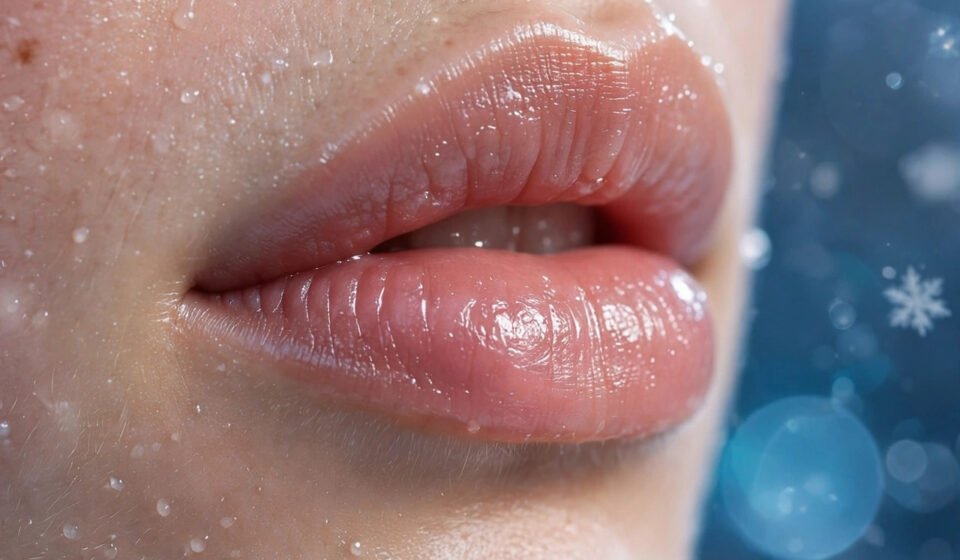

Cold air, indoor heating, and winter wind are brutal on lips — and unlike the rest of your face, your lips have no oil glands of their own, so they can’t moisturize themselves. That’s why a dedicated winter lip care routine 2026 matters more than any single “miracle balm.” The right routine layers gentle exfoliation, deep hydration, and serious protection so your lips stay soft from the first frost through spring.
This guide walks through the complete routine — morning to night — plus what to avoid and how to fix lips that are already cracked. Product prices vary widely, so check Ulta, Sephora, or Target for current pricing on anything mentioned.
Why Winter Destroys Your Lips
Understanding the enemy helps you fight it. Three things gang up on your lips every winter:
Low humidity. Cold air holds less moisture, and heated indoor air is even drier — often below 30% humidity. Your lips lose water to the air constantly.
No oil glands. The skin on your lips is some of the thinnest on your body, and it produces no natural oils. Without a routine replacing that lost moisture, dryness is inevitable.
Constant exposure. Unlike the rest of your face, your lips are almost always uncovered — plus talking, eating, and drinking steadily wipe away whatever protection you apply.
The result: dryness, flaking, cracking, and in bad cases, painful splits at the corners. A proper winter lip care routine 2026 addresses all three causes, not just the symptoms.
The Complete Winter Lip Care Routine 2026
Step 1: Gentle Exfoliation (2–3 Times Per Week)
Dead, flaky skin blocks moisture from getting in — so exfoliation comes first, but gently. Use a dedicated lip scrub (sugar-based formulas are the classic) or make a DIY version with sugar and honey. Massage it over your lips in small circles for about 30 seconds, then rinse or wipe away.
Critical rules: never exfoliate cracked or bleeding lips (you’ll make them worse), never scrub daily (2–3 times a week is plenty), and always follow immediately with balm. Over-exfoliation is one of the most common mistakes in any winter lip care routine 2026 — if your lips feel raw afterward, you’re doing it too often or too hard.
Step 2: Hydrating Base Layer (Every Morning)
After cleansing your face in the morning, apply a hydrating lip product while your lips are still slightly damp — damp skin absorbs moisture far better than dry skin. Look for humectant ingredients like hyaluronic acid or glycerin, which pull water into the lip tissue. A thin layer is enough; this is the moisture foundation everything else seals in.
Step 3: SPF Lip Protection (Every Day)
Yes, even in winter. UV rays damage lips year-round, and snow and bright winter sun reflect UV right onto your face. Use a lip balm with SPF 30 every morning as part of your winter lip care routine 2026 — it’s the single most-skipped step and one of the most important. Reapply every two hours when you’re outdoors, just like facial sunscreen. If your everyday balm doesn’t have SPF, layer an SPF lip product over it before heading out.
Step 4: Rich Balm Barrier (Throughout the Day)
This is the workhorse step: a rich, occlusive balm that seals in all the hydration underneath. The best winter formulas center on proven barrier ingredients — shea butter, ceramides, petrolatum, or lanolin. Keep one everywhere: your bag, your desk, your coat pocket, your nightstand. Reapply after eating and drinking, after being outdoors, and whenever your lips feel even slightly dry. In deep winter, “whenever you think of it” is about the right frequency.
Step 5: Overnight Lip Mask (Every Night)
Night is when the real repair happens — hours of undisturbed time for treatments to work. After your evening skincare, apply a thick layer of an overnight lip mask or a dense lip ointment. These are formulated heavier than daytime balms specifically because they don’t need to feel elegant under lipstick. If your lips are very dry, layer the mask over a thin coat of your hydrating product from Step 2 — the “lip sandwich” method. You’ll wake up to noticeably softer lips within a few nights of consistent use.
Step 6: Humidifier Support (While You Sleep)
This step isn’t a product — it’s environmental. Running a humidifier in your bedroom counteracts the moisture-sucking effect of indoor heating while you sleep, which is when your lips go the longest without reapplication. It’s the highest-impact non-product change you can make to your winter lip care routine 2026, especially if you wake up with dry, tight lips every morning.
Step 7: Weekly Reset Treatment
Once a week, give your lips a mini facial: exfoliate (Step 1), apply a hydrating layer (Step 2), then a thick mask layer (Step 5), and leave it for 15–20 minutes while you do the rest of your skincare. Wipe off the excess and finish with your rich balm. This weekly reset keeps buildup from accumulating and gives the daily routine a fresh starting point.
Morning Winter Lip Care Routine 2026 (Quick Version)
Short on time? Here’s the condensed morning version of the winter lip care routine 2026 that takes under a minute:
- While lips are damp from face washing, apply a thin hydrating layer.
- Apply SPF 30 lip balm over it.
- Done — toss the balm in your bag for reapplication.
If you wear lipstick, do this routine first, let it absorb while you do the rest of your makeup, then blot lightly before applying lip color. Our best winter lipsticks guide pairs perfectly with prepped lips — color applies smoothly instead of catching on dry patches.
Night Winter Lip Care Routine 2026 (Repair Version)
The nighttime version is where healing happens:
- Remove all lip color gently — no harsh scrubbing. A micellar water or cleansing oil on a soft cotton pad works.
- If it’s an exfoliation night (2–3x/week), do the gentle scrub now.
- Apply a hydrating layer to slightly damp lips.
- Seal with a thick overnight mask or ointment — be generous.
- Run the humidifier.
Consistency matters more than products here. Two weeks of this nightly winter lip care routine 2026 will transform even badly chapped lips.
What to Avoid in Your Winter Lip Care Routine 2026
Just as important as what you do is what you don’t do:
Don’t lick your lips. Saliva evaporates in seconds and takes your lips’ natural moisture with it — licking makes dryness worse, not better, every single time.
Don’t pick or bite flaking skin. Pulling off flakes tears healthy skin underneath and can cause bleeding and slow healing. Exfoliate gently instead, or let the flakes soften under balm and come off on their own.
Avoid irritating ingredients. Skip lip products with menthol, camphor, eucalyptus, or strong fragrances in winter — the tingle feels productive but it’s irritation, and irritated lips heal slower. Fragrance-free is the safest bet for compromised lips.
Don’t skip SPF. Winter sun, especially reflected off snow, burns and dries lips. The SPF step is not optional in a complete winter lip care routine 2026.
Don’t use matte liquid lipsticks on bare winter lips. They’ll crack and flake within hours. Always do the balm-first routine (apply at the start of makeup, blot before lipstick) — it makes even the driest formulas wearable.
Fixing Already-Cracked Lips
If you’re starting from damaged lips, simplify: stop all exfoliation, stop all actives, stop matte lipsticks. For one week, do only this — gentle cleanse, hydrating layer, thick occlusive (petrolatum-based ointment is the gold standard for repair), reapplied constantly. Sleep with the mask layer and humidifier running. Most cracked lips show major improvement within 5–7 days of this stripped-back repair version of the winter lip care routine 2026. If cracking at the corners persists beyond two weeks, or if there’s bleeding that won’t stop, see a dermatologist — persistent angular cracks can signal a deficiency or infection, not just dryness.
Frequently Asked Questions About the Winter Lip Care Routine 2026
How often should I exfoliate my lips in winter?
Two to three times per week maximum, and never on cracked or bleeding lips. Over-exfoliation is worse than none at all — it strips the fragile barrier your lips are trying to rebuild.
What’s the difference between a lip balm and a lip mask?
A balm is a daily protective product (lighter, wearable under lipstick); a mask is a heavier overnight treatment designed for extended repair while you sleep. Your winter lip care routine 2026 needs both — they do different jobs.
Do I really need SPF on my lips in winter?
Yes. UV damage happens year-round, and winter conditions (bright sun, snow reflection, high altitude) can intensify exposure. An SPF 30 lip balm every morning is one of the highest-value steps in the routine.
Why are my lips still dry even though I use balm constantly?
Usually one of three reasons: you’re applying balm to dry lips instead of slightly damp ones (so there’s no moisture to seal in), your balm contains irritants like menthol or fragrance, or you’re licking your lips throughout the day. Fix the technique before buying a new product.
Can I use my face moisturizer on my lips?
In a pinch, yes — it’s better than nothing. But lips benefit from dedicated occlusive formulas, since facial moisturizers are designed to absorb, not to sit as a protective barrier. A simple petrolatum ointment outperforms most face creams on lips.
Final Thoughts
A good winter lip care routine 2026 isn’t about finding one magic product — it’s about the system: exfoliate gently, hydrate on damp lips, protect with SPF by day, repair with masks by night, and stop the habits (licking, picking, irritants) that undo your progress. Start tonight with the night routine, and give it two consistent weeks. Your lips will thank you every time you smile into the cold.
For more winter skincare, see our winter skin barrier routine for the full-face version of this approach, and browse our best winter lipsticks once your lips are prepped and ready for color. For daily inspiration, visit our homepage for the latest beauty tips.